Report: CEIPA × TOYOTA GROUP “MUSIC WAY PROJECT” Community Workshop 1st Edition (Catalog Edition)
The CEIPA × TOYOTA GROUP “MUSIC WAY PROJECT” Community Workshop is a seminar series following the Professional Seminar Public Series held throughout 2025. In addition to the Flagship Series, which continues in the same format as previous seminars, and the practical Intensive Workshop held at the end of last year, the Community Workshop was launched as a platform to encourage discussion and exchange among participants. For this inaugural session, titled “Catalog Edition,” participants shared information on market trends related to the international expansion of catalog music, among other topics.

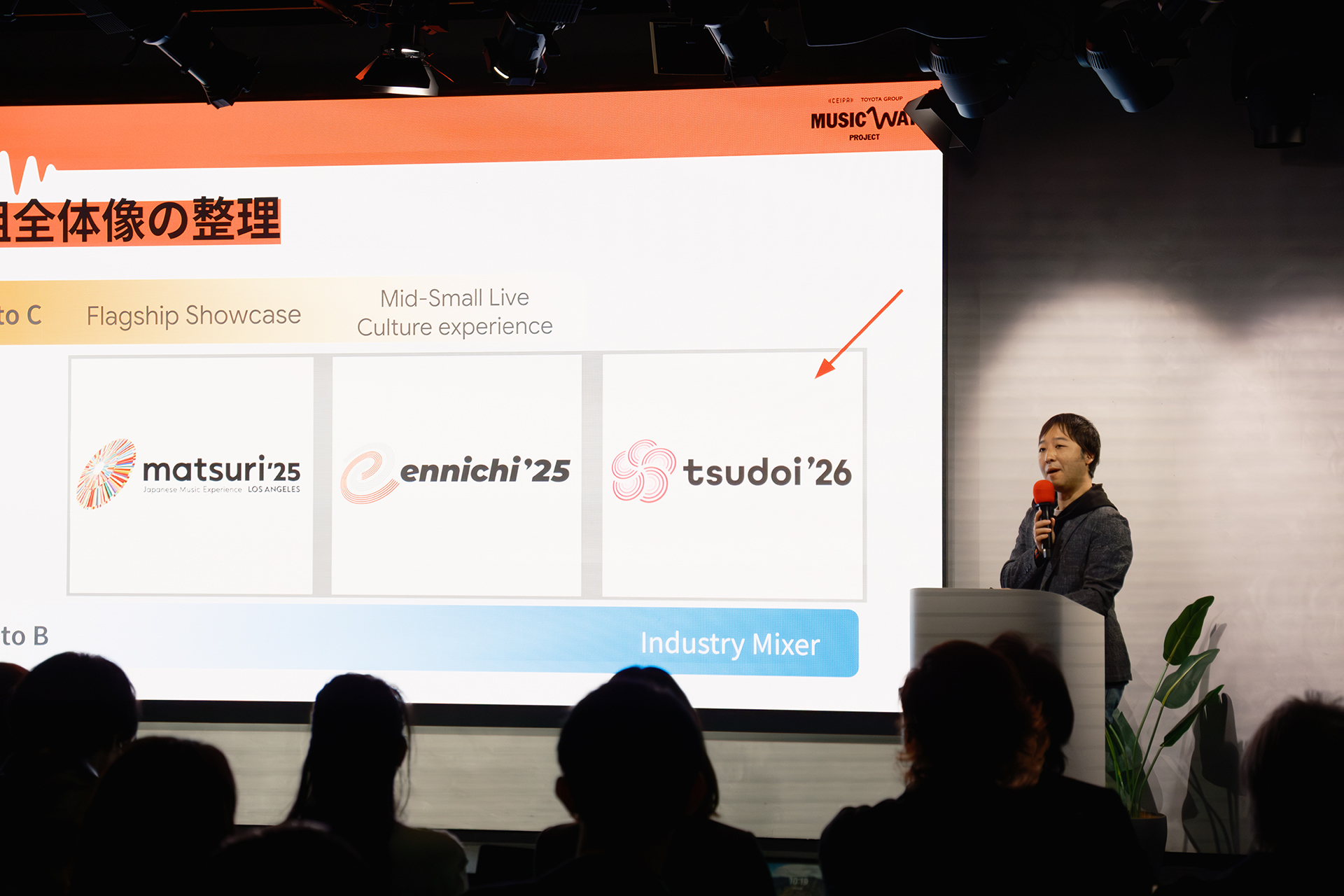
Before moving into the main session, the launch of the Facebook group “tsudoi Online β” was announced to participants. Centered on sharing information about various events from the MUSIC WAY PROJECT Secretariat, the group is intended to be further developed by incorporating feedback and input from participants. Taro Kumabe, Executive Director of the MUSIC AWARDS JAPAN Executive Committee, shared details about MUSIC AWARDS JAPAN 2026, Japan’s largest international music awards event, scheduled to take place this June. Takeya Kito of YouTube Japan / Google also provided an update on “tsudoi’26,” a networking initiative connecting industry professionals with overseas markets. Following successful panel discussions and showcase live events held in Jakarta, Manila and Seoul between January and March this year, the initiative aims to continue this fiscal year with stronger collaboration with the Professional Seminar and a greater focus on ongoing business matching. Going forward, updates related to these initiatives are also expected to be shared through the Facebook group “tsudoi Online β”.
The main session, titled “Deep Dive - The Catalog!” featured four different expert speakers. First, Takayuki Oki from Nippon Columbia delivered a presentation on the company’s catalog utilization strategy. To leverage its vast catalog of recordings built over 115 years of history, the company has established two strategic pillars: “Kata-Digi” (the digitization of catalog assets, including proper rights management and metadata optimization) and curation (promotional initiatives tailored to market needs).
As a flagship initiative representing this strategy, the company launched J-DIGS, its in-house brand dedicated to bringing catalog music from the 1970s and 1980s to overseas markets. More than simply a music distribution brand, J-DIGS integrates three core pillars such as licensing, physical, and digital, seeking to maximize synergies through a comprehensive, multi-faceted approach, including adapting communication strategies to meet regional market needs.
Looking ahead, the company plans to pursue further synergy not only through catalog assets, but also by collaborating with active international artists.

The second speaker was Yuichi Mamiya, owner of the record store Face Records NYC in New York, who appeared via a pre-recorded interview due to being based in the United States.
According to Mamiya, Japanese music accounted for only around 20% of the store’s sales when it opened in 2018, but that figure has now surged to more than 80%, driven by the city pop boom that gained momentum before and during the pandemic.
Among younger audiences in the U.S., limited editions and rare records are often seen as highly desirable, even hype-driven items. In recent years, interest has expanded beyond city pop to include Japanese jazz and J-fusion artists such as CASIOPEA and Masayoshi Takanaka. More recently, attention has moved beyond the 1970s and 1980s toward artists from the 1990s and 2000s, with growing interest in acts such as Lamp, Fishmans and Ringo Sheena.
Mamiya expressed the view that demand for catalog recordings is likely to continue growing in the years ahead.

Mitsuyoshi Takeuchi of Toyo Kasei Co., Ltd. featuring as the third speaker of this edition, reported that the company’s overseas shipments of vinyl records increased by 67% between 2022 and 2024.
In addition to growing demand across Asian markets such as South Korea, China, Thailand and the Philippines, Japanese pressings have also been gaining popularity in Europe, particularly in the UK and France. Among these markets, Takeuchi highlighted Indonesia as an especially “hot market,” noting that imported records from Europe, the U.S., and Japan continue to attract buyers, particularly younger consumers, even at price points of ¥5,000 to ¥6,000.
He also shared data showing that vinyl sales in the United States have risen for 19 consecutive years, with 60% of Gen Z consumers having purchased a record within the past year. Further data pointed to renewed interest in cassette tapes and CDs across multiple countries.
Takeuchi concluded that overseas markets hold latent demand for Japanese content that does not exist to the same extent in Japan, and that there are significant opportunities not only in vinyl, but also across other media formats.

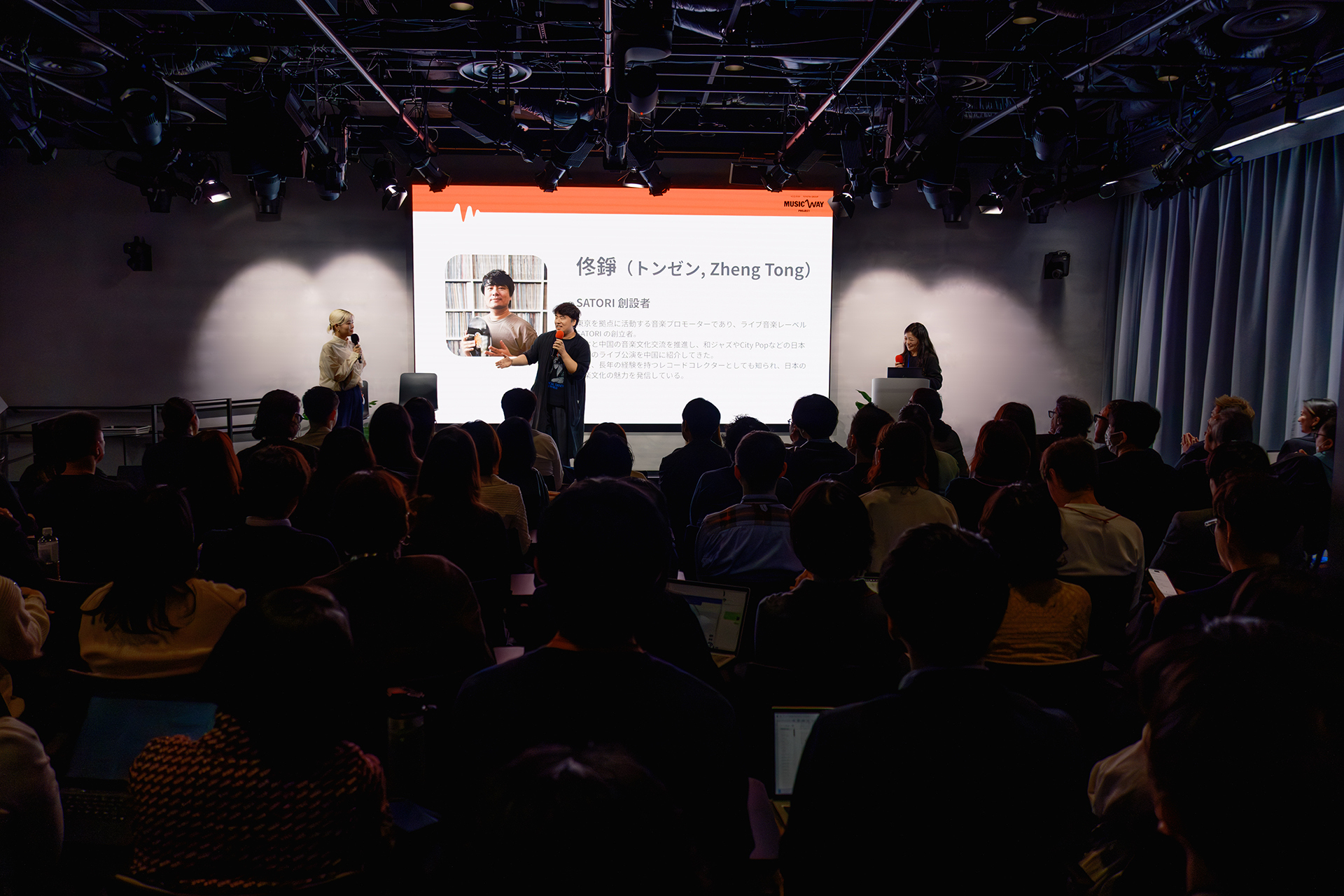
The final speaker was Tong Zheng, founder of live promoter SATORI. The presentation was conducted in an interview format, moderated by Sumire Tanaka of Nippon Columbia.
Tong introduced examples of growing momentum around Japanese catalog music in the Chinese market, particularly in the live sector, highlighting the explosive popularity of Hitomi Tohyama’s CATHY as a notable case. He also noted rising interest in Japanese jazz (“Wa-Jazz”), citing artists such as Fumio Itabashi and Takeo Moriyama.
According to Tong, this trend is driven in part by a tendency among young Chinese audiences to value high-quality Japanese catalog music as a kind of “hidden treasure” known only to a select few, combined with the influence of social media culture.
While live promotion in mainland China remains challenging at present, he expressed a desire to continue bringing Japanese artists to local fans by expanding into other cities such as Seoul, Bangkok and Singapore.
Following the session, a Q&A and informal networking reception provided opportunities for exchange between speakers and participants. The Community Workshop series is scheduled to be held approximately four times over the course of this year.