
WinningShot, the South Korean Three-Piece Band | Artist Interview from MUSIC AWARDS JAPAN WEEK SPECIAL LIVE – Shibuya Sound Scramble 2026
Artists from across Asia gathered in Tokyo on June 11 for MUSIC AWARDS JAPAN WEEK SPECIAL LIVE – Shibuya Sound Scramble 2026, a showcase held as part of the official program surrounding MUSIC AWARDS JAPAN 2026, Japan’s largest international music awards.
Guided by the awards’ vision of “Connecting with the world, illuminating the future of music,” the event brought together globally active Asian artists across three venues in Shibuya — duo MUSIC EXCHANGE, Spotify O-WEST, and Spotify O-nest — for a series of performances spanning generations and genres.
For this interview, we caught up with WinningShot, a South Korea-based three-piece band performing on the TOKYO CALLING Stage at Spotify O-WEST. Ahead of the show, drummer KIM spoke with us about the band and their music.
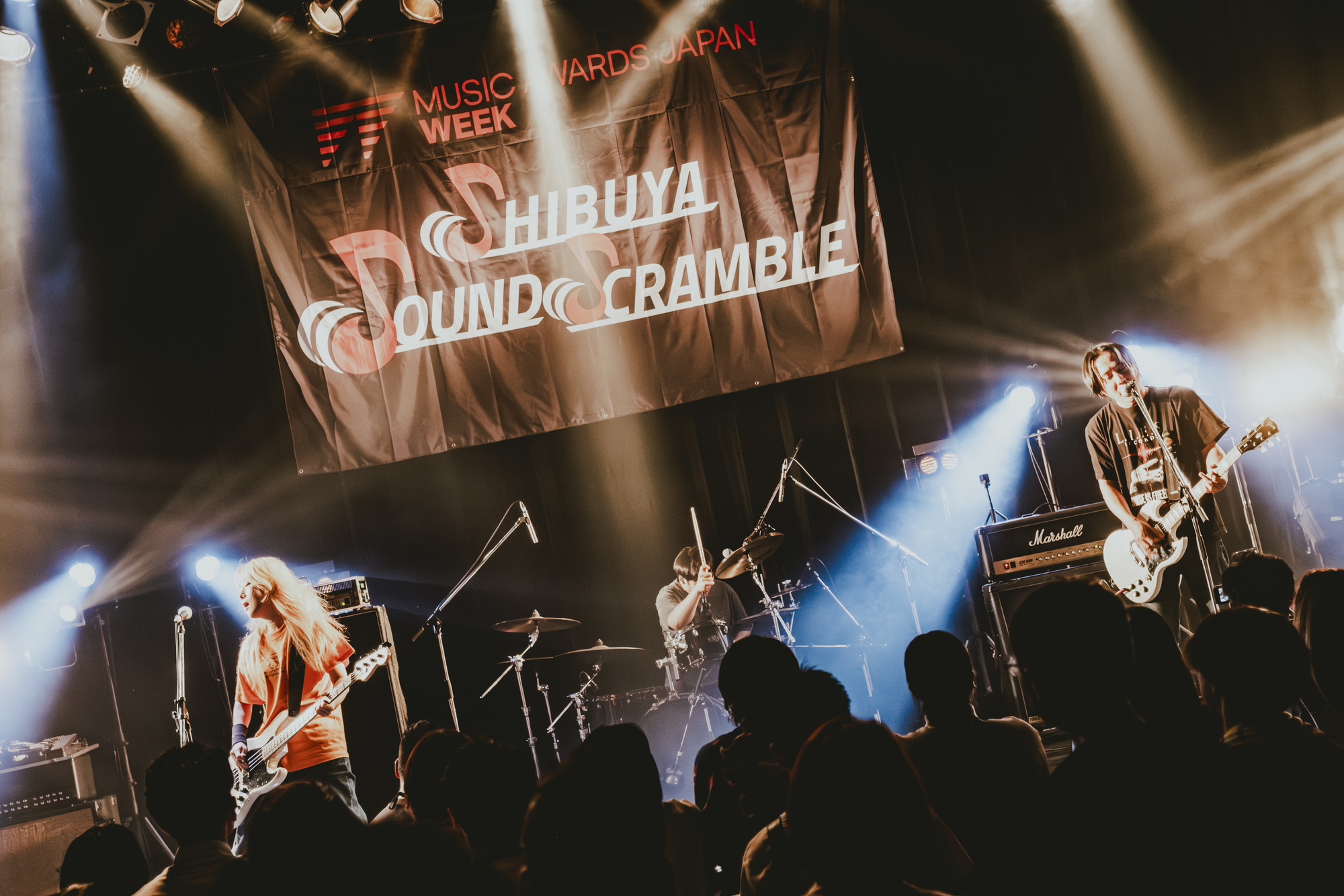
— How do you view MUSIC AWARDS JAPAN as an international music award?
KIM: Korea also has international music awards, but the format is often quite different. In Korea, the performance stage is usually built inside the awards venue itself, and artists perform there as part of the ceremony.
In Japan, by contrast, there are dedicated live stages held separately from the main awards venue, which felt quite different to me. Japanese events also seem more official and formal compared with those in Korea.
— Could you tell us about your musical roots and the artists who have influenced you?
KIM: The first band that had a major influence on me was Lagwagon from the United States. When I first started playing in a band, I was also inspired by Japanese bands such as HOTSQUALL and FOUR GET ME A NOTS.
I especially admired bands with both female and male vocalists, and that was the kind of image we had in mind when we started creating our own music. We have also drawn a lot of influence from Japanese melodic hardcore bands more broadly.
Our musical roots really come from combining elements of American punk and Japanese punk.
— What aspect of Korean music culture do you think deserves more recognition?
KIM: K-pop is hugely popular around the world now. I personally listen to a lot of girl groups, and one thing I really admire is how clearly each Korean act defines its own concept and fully expresses the world around it.
For example, one group might be known for an electronic sound, while another has a completely different identity. Each act has a distinct concept and commits to it consistently. I think that clarity and attention to identity are major strengths of Korean music.
— Is there a particular experience you've had while performing overseas that has stayed with you?
KIM: We've mainly performed in Malaysia and Japan. One thing that really stood out to me in Japan is its live house culture.
Every area seems to have its own venue that people are proud of, and there's a real sense of community connecting established bands with younger ones. More experienced bands genuinely support the next generation, and that's something we don't really have in Korea. It's something I really admire. There are also so many live houses across Japan, which makes it an incredibly exciting music culture.
— Have you noticed any differences between Japanese and Korean audiences?
KIM: Before coming here, I had this image of Japanese people being very polite and quiet. But once we actually started playing live in Japan, that impression completely changed.
At heavier shows especially, Japanese audiences are often even more energetic than Korean crowds. They're incredibly passionate, they react loudly, and they really throw themselves into the performance. That contrast genuinely surprised me.
— Are there any artists you'd like to collaborate with in the future?
KIM: Last year, we released a split EP, Blending Horizons, with FOUR GET ME A NOTS. That was a really meaningful experience for us.
If we're allowed to dream, though... Taylor Swift. (Laughs.)
— Are there any artists you particularly admire?
KIM: It depends on the person. Kwon Ki-hwan (vocals, guitar) is a big fan of The Beatles and listens to a lot of classic artists. Yeowon (vocals, bass), on the other hand, is really into British bands like Oasis.
As for me, I actually listen to more Japanese artists than Western ones. I really like Ivy to Fraudulent Game, and I'm also a fan of aiko and Yutaka Ozaki.
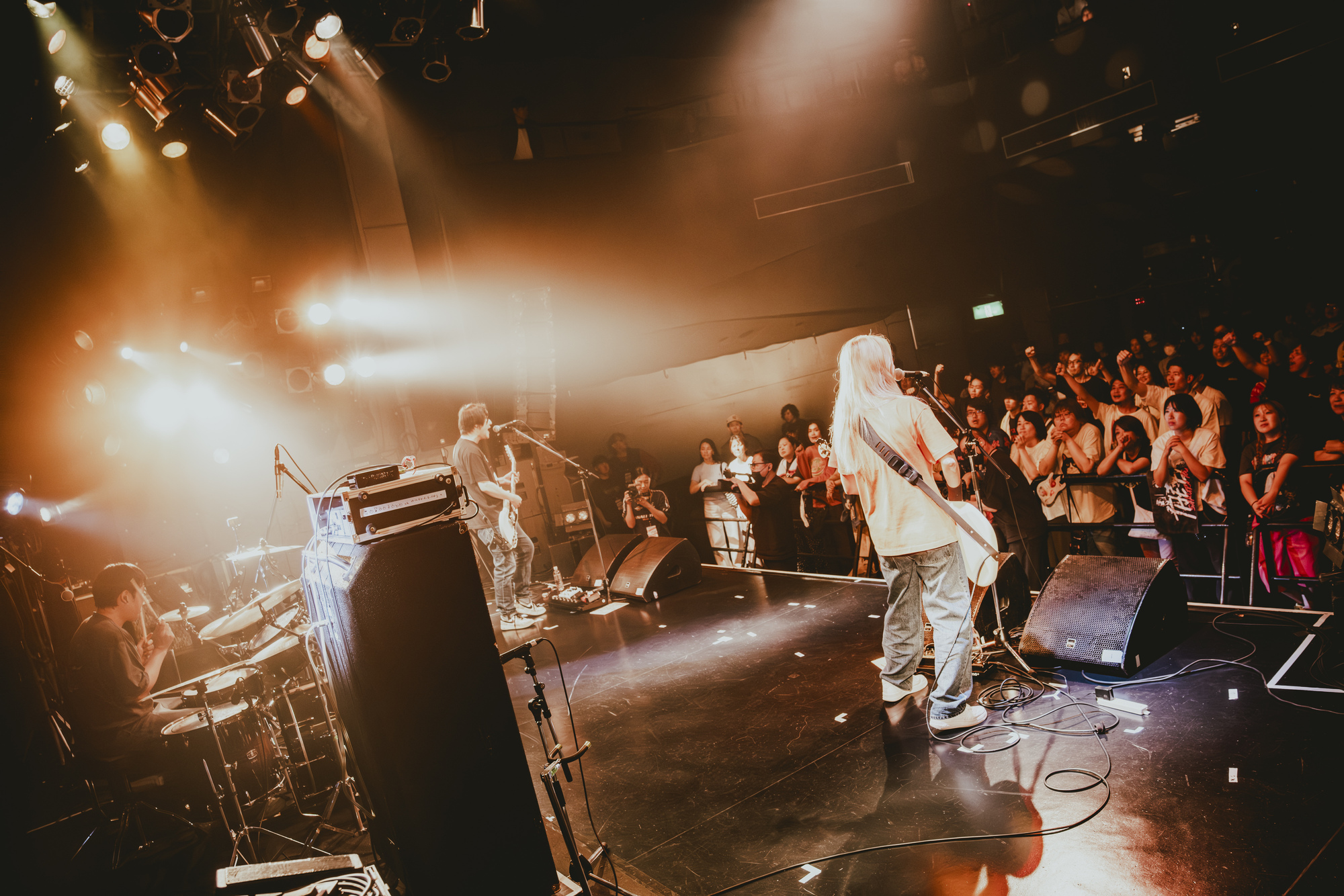
— How would you like to see Asian music culture evolve in the future?
KIM: I think the question is really about what kind of music Asia can create for itself. These days, it feels like there are fewer and fewer limits on what artists can do. For a long time, though, American and British music set the standard for much of the world. I'd love to see Asia develop its own movement—something that's uniquely Asian rather than simply following existing trends.
— If you could tour another country, where would you most like to go?
KIM: Right now, I'd love to tour the UK.
— Is there anything you'd like to say to Japanese audiences?
KIM: I'd love for more people in Japan to become curious about Korean music and explore it a little more.
Korea has an incredibly diverse music scene with artists working across so many different genres. Beyond K-pop, there are fantastic bands, singer-songwriters, and all kinds of musicians creating great music. K-pop is wonderful, of course, but I hope people will also discover everything else the Korean music scene has to offer and enjoy that diversity.
— You're about to take the stage today. How are you feeling ahead of the performance?
KIM: We're going to give it everything we've got.
We're a Korean band, but for example, RIKI is from Taiwan, and Asia is made up of so many different countries. There are artists from all over the region here at MUSIC AWARDS JAPAN, and rather than focusing on where each of us comes from, I hope people will simply enjoy it as Asian music — or even more simply, as music.
We already have fans in places like Taiwan, Indonesia, and Malaysia, and I think it's amazing that music allows us to connect across borders. I hope today's performance helps everyone feel that sense of connection and unity.