
How Mrs. GREEN APPLE Built a 100-Ton Tower of Babel for Their Dome Tour | MUSIC AWARDS JAPAN 2026 Winner Interview
Launched in 2025 under the concept “Connecting with the world, illuminating the future of music,” MUSIC AWARDS JAPAN (MAJ) is Japan’s largest international music awards, established by the Culture and Entertainment Industries Promotion Association (CEIPA), an organization formed by five major Japanese music industry associations.
Held in June, MAJ 2026 expanded to 78 categories, including newly established awards recognizing the professionals working behind the scenes of concerts and live events. Alongside the artists and creators shaping Japan’s music industry, the awards also shone a spotlight on the people who bring live performances to life.
OTOMO spoke with Masahiro Minowa and Hiroki Yasui of Nippon Stage Co., Ltd., who received the Best Stage Production Staff award for their work on “Mrs. GREEN APPLE’s DOME TOUR 2025 “‘BABEL no TOH’.”
The tour featured a towering “Tower of Babel” stage set standing approximately 20 meters tall and weighing around 100 tons. How did the team bring such an ambitious production to life? Minowa and Yasui take us behind the scenes of one of the tour’s most striking features.
Interview by Kyu Nakanishi
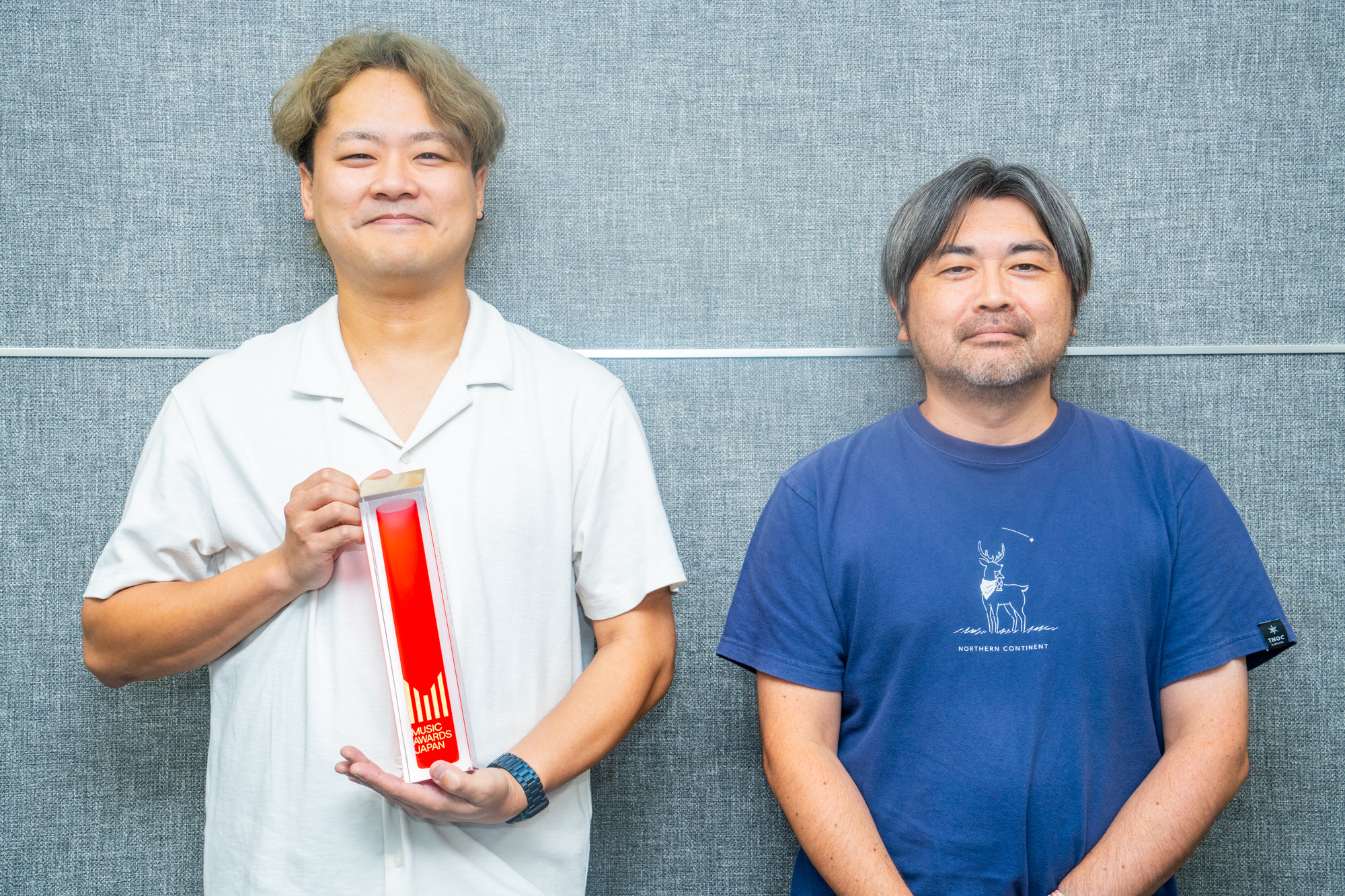
Hiroki Yasui and Masahiro Minowa
“How Are We Going to Pull This Off?”
—Could you start by telling us a little about your respective roles? Minowa, you're the Stage Production Director, and Yasui, you're the Construction Management Director, correct?
Masahiro Minowa: I'm actually part of the sales department at Nippon Stage. So, like any other sales role, my job starts with securing projects. From there, I oversee everything from meetings and technical drawings to setting up and taking down the stage, including managing the budget. Basically, I'm involved from start to finish.
Yasui, on the other hand, works in our construction department. He's the one in charge of the actual work on-site.
Hiroki Yasui: I supervise the crews who physically build the stage, including stagehands, riggers and temporary staff. That covers setup and teardown, but also any set changes during the performance. I'm responsible for overseeing all of that.
Minowa: He's basically like a site supervisor in construction. I'm not always on-site, but Yasui is there the whole time.
—So Yasui is the site supervisor, while Minowa is more like the boss who drops by every now and then?
Minowa: I'm not quite that important [laughs].
—Mrs. GREEN APPLE's DOME TOUR 2025 "BABEL no TOH," which you both worked on, won the Best Stage Production Staff award at MUSIC AWARDS JAPAN 2026. You shared the award with Takaaki Ota of Project-MGA. What was it like working with him?
Minowa: Ota was the creative director, overseeing the overall design of the concert while taking the band's vision into account. Our work began when he presented us with an outline of what he wanted the stage to look like. I remember seeing it for the first time and thinking, "This is going to be a challenge" [laughs].
—I can imagine [laughs]. The stage featured an enormous "Tower of Babel" standing around 20 meters tall and weighing approximately 100 tons. It was a production on an extraordinary scale.
Minowa: Our job was to figure out how to turn that vision into reality. We only had a limited amount of time at each venue, so we had to work out how to build the set within that window. And of course, we also had to account for the time needed to take everything down.
We went through a lot of discussions internally at Nippon Stage and worked with our partner companies to come up with practical solutions. We'd look at an idea and figure out how we could make it happen. Sometimes we'd have to say, "We can't do it exactly that way, but how about this instead?" There was a lot of problem-solving involved.
Yasui: Once Minowa had worked out the overall plan, he'd pass it on to me. My job was to break it down into individual steps and figure out how to get everything built within the time available.
That meant working out the construction schedule, how many people we'd need for each task, how much equipment and material we were dealing with, how many trucks we'd need and how to arrange all of that. Every day was pretty hectic, but somehow we managed to pull it off.
—Speaking of trucks, how many did you need?
Yasui: We used 150 just for our stage sets.
—150?!
Minowa: And we're talking about large trucks, too [laughs].
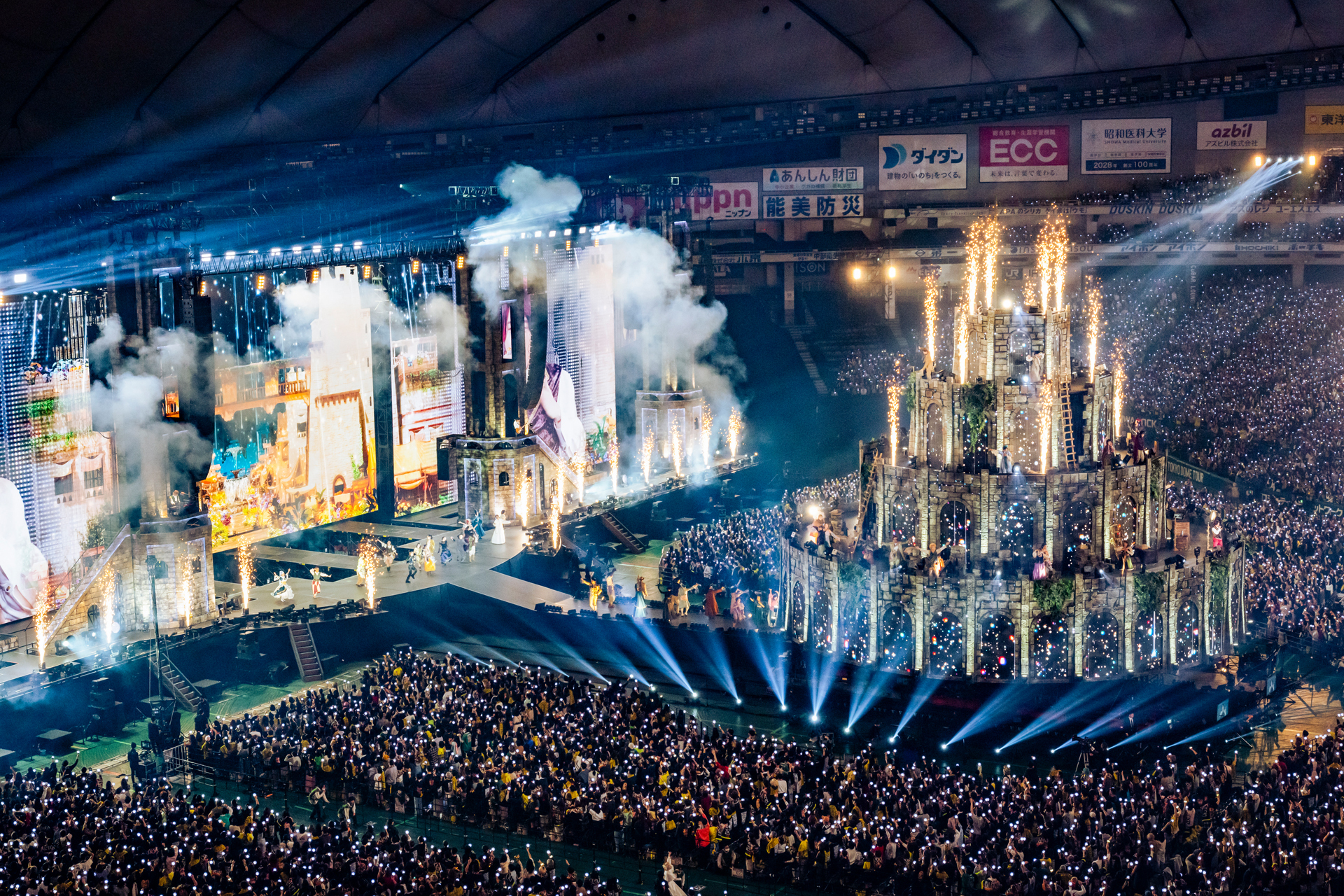
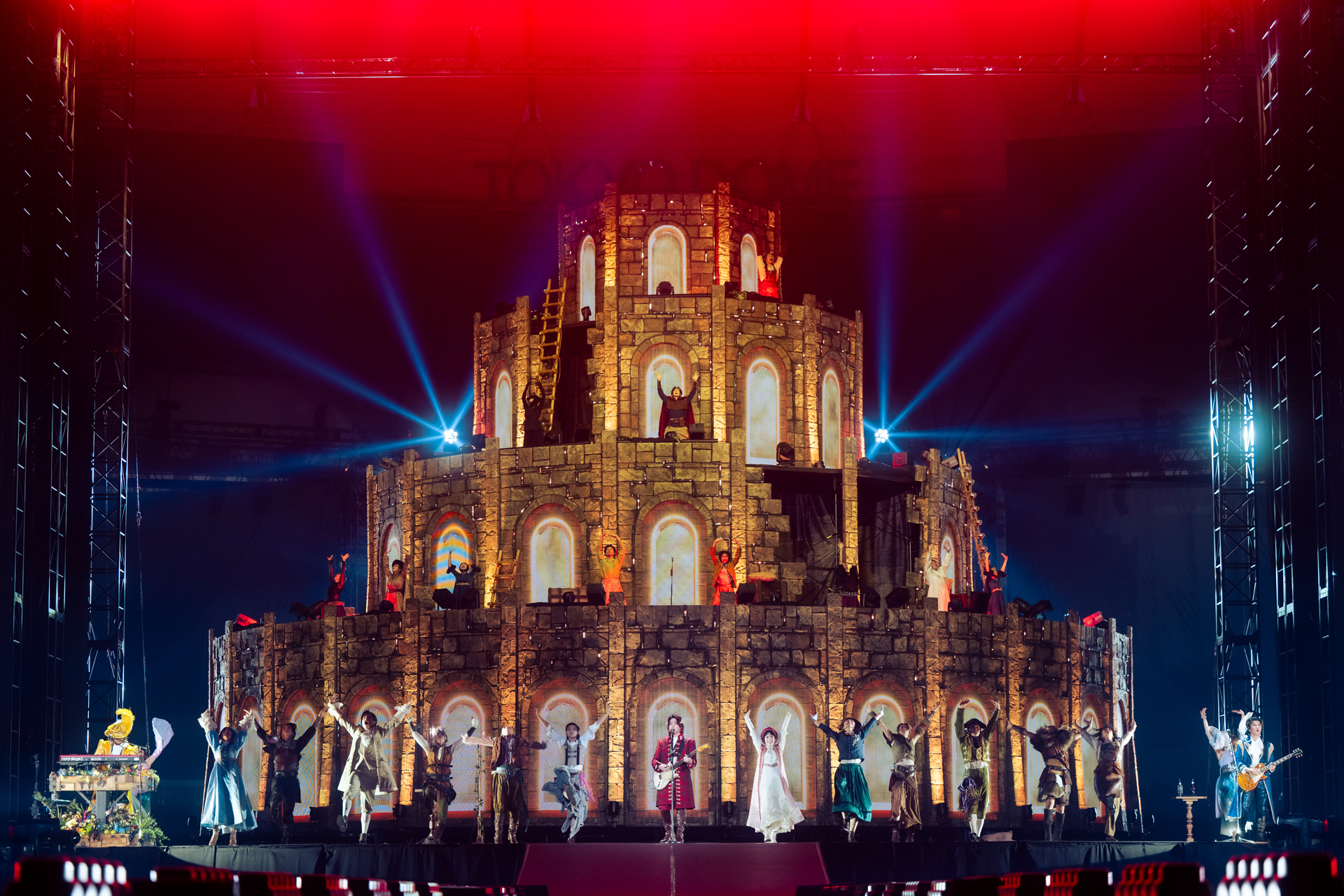
Scenes from the "Mrs. GREEN APPLE DOME TOUR 2025 'BABEL no TOH'" concert at Tokyo Dome. (Photo: Seitaro Tanaka Photography)
Only Mrs. GREEN APPLE Could Have Pulled This Off
—How long did it take to build the set?
Minowa: For the opening shows at Vantelin Dome Nagoya, we were working on it for about five days straight. There was so much going on that it got to the point where we couldn't even tell what counted as finished anymore. We were looking at the same scenery day after day [laughs].
Yasui: Exactly [laughs]. Nagoya was especially challenging because it was our first venue. We had to explain every detail to the crew, answering questions like "How does this work?" and "How are we supposed to put this together?" while getting on with the actual construction.
Of course, everyone needed breaks, so we had to rotate crews in and out while constantly giving instructions across the entire site. I couldn't leave the site for a moment. Eventually, I completely lost track of how many days we'd been there [laughs].
Minowa: We have to work around the baseball schedule and find openings when the stadium isn't being used. Sometimes that means we only get three days in total.
We actually had a relatively generous schedule for the opening shows in Nagoya, but the teardown schedule for the final shows at Tokyo Dome was particularly tight.
Yasui: We had to dismantle everything and be completely out of the venue by 7 am the morning after the final show.
Minowa: Everything we'd spent three or four days building at the start of the tour had to be completely cleared away overnight.
—That sounds almost like magic.
Minowa: It really does. We somehow managed to get out at around 7:05 am [laughs].
Making everything happen within a fixed schedule requires close coordination between all the different departments. Every venue has its own challenges, too, so we had to work through all the details in advance and make sure everyone was on the same page.
—Even compared to other concerts with elaborate stage sets, this was on a completely different scale, wasn't it?
Minowa: Absolutely. These days, a lot of concerts rely on video screens and projections for their stage visuals, so building a physical set on this scale is incredibly rare. And that was just our part of it. There was also a huge amount of sound and lighting equipment, not to mention all the special effects. The whole production was enormous. More than anything, I was just relieved when we got through it all without any major problems.
—Building something physical rather than relying on video must be a lot of work, but isn't there also something particularly rewarding about it for people who work in stage production?
Minowa: Well, it's nice once in a while. I wouldn't want to do it every time [laughs].
Yasui: This is just my personal opinion, but I think there's a real difference between seeing something on a screen and seeing a physical set in person. There's a sense of depth and presence that you just don't get from video. It's a lot more work, but personally, I prefer having an actual set onstage. Though this one was a pretty extreme example [laughs].
Minowa: Of course, when you're dealing with that much material and equipment, cost becomes a major factor. I think this was something only Mrs. GREEN APPLE could have pulled off.
I was also working on another artist's dome tour around the same time, and that was an incredible production in its own right. But in terms of the sheer amount of physical scenery and set pieces, there was really no comparison.
Yasui: I agree. It really had to be Mrs. GREEN APPLE. You'd need an artist whose creative vision actually calls for a set like that, and who is successful enough to have the budget to make it happen. Without both of those things, I don't think a production like this would have been possible.
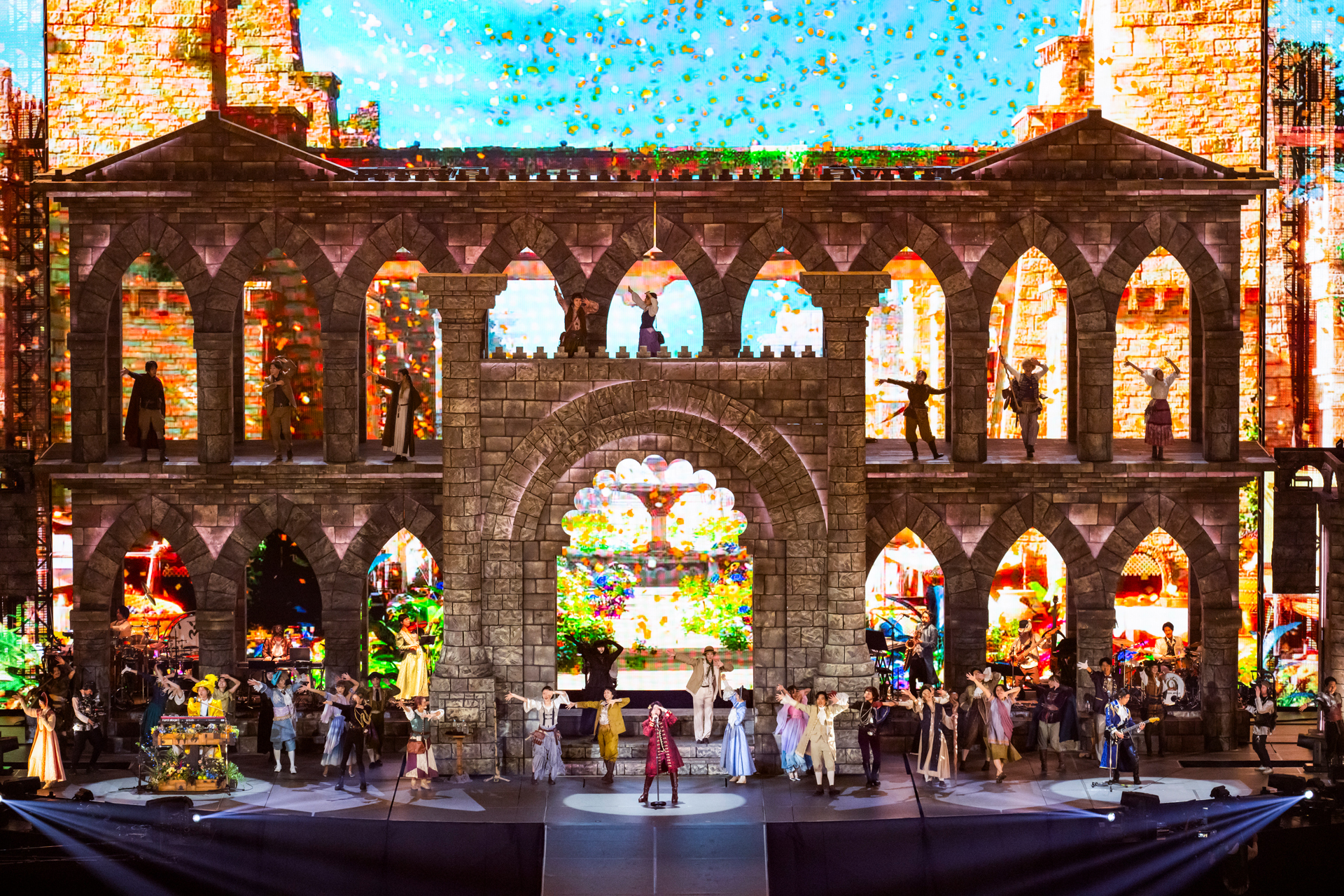
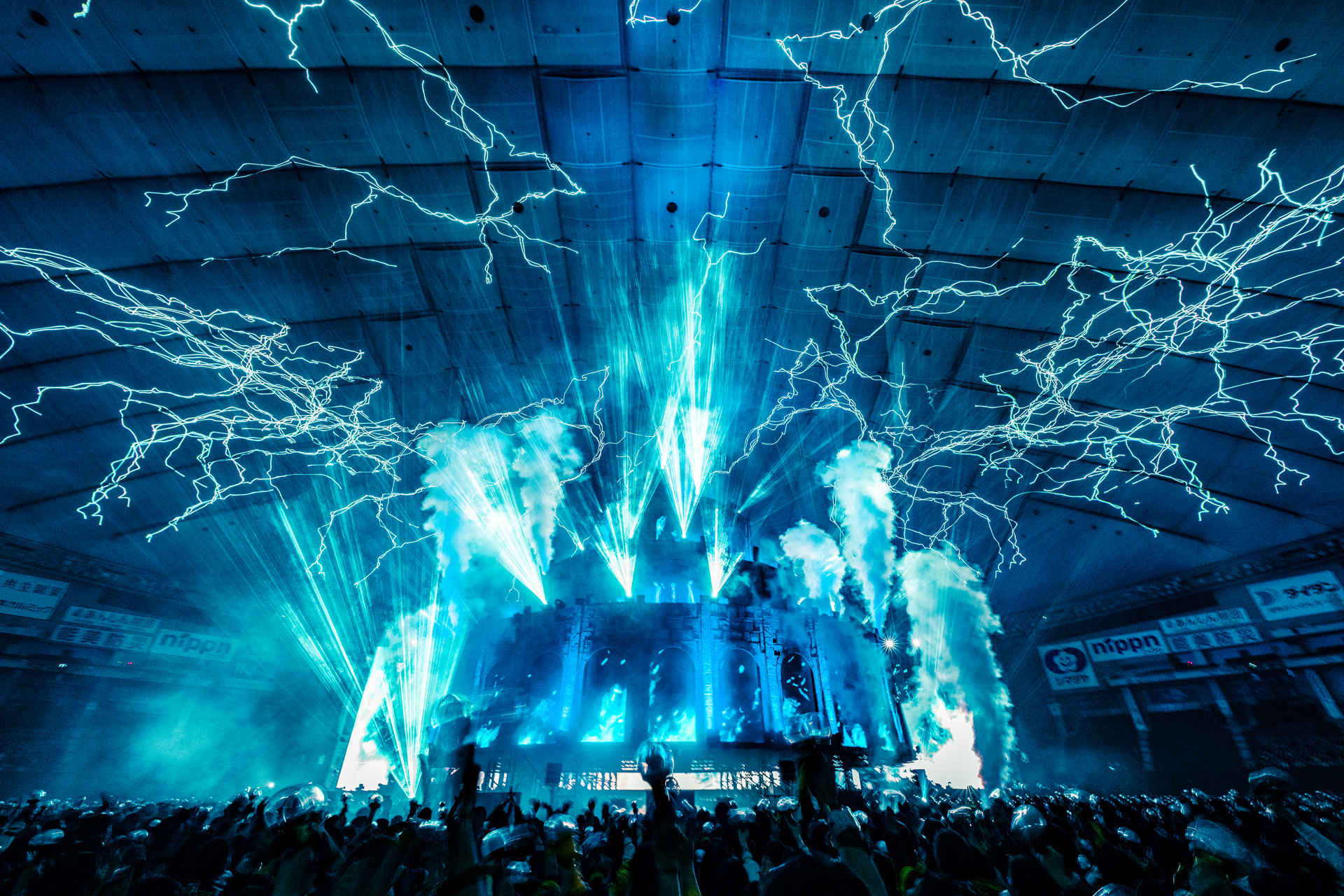
Scenes from the "Mrs. GREEN APPLE DOME TOUR 2025 'BABEL no TOH'" concert at Tokyo Dome. (Photo: Seitaro Tanaka Photography)
Making It All Work Together
—When communicating with the artist's team, including Ota, what do you consider most important?
Minowa: We can't always make every idea happen exactly as envisioned, so we try to stay in close communication and suggest alternatives when necessary. We might say, "What if we tried doing it this way instead?"
Ultimately, whatever we come up with has to satisfy Ota and the band members. We made sure we had their approval before moving forward with anything.
Yasui: That's something we pay a lot of attention to on-site, too. Sometimes the crew will look at the technical drawings and think, "Wouldn't it be easier to build it this way?" But even a small change can cause problems. Equipment that was supposed to fit might no longer have enough space, or a set change during the show might become impossible.
So I have to explain why certain things can't be changed. I might say, "There's a reason it has to be done this way. I know it's a little more difficult, but please follow the drawings." I made a point of checking every detail to make sure everything was built correctly.
—And on top of that, you have to coordinate with other departments, like sound and lighting.
Minowa: That was really challenging. Technically, you can put on a concert without any stage scenery. If you have lights and microphones, you can make a show happen. Those are the essentials, so we try to accommodate the sound and lighting teams' requirements as much as possible.
But sometimes their requests are difficult to accommodate, and that's where communication becomes especially important. It's not just something we deal with on Mrs. GREEN APPLE's productions.
These days, video is also an essential part of live concerts. So when you're trying to make everything work for the sound, lighting, video and stage production teams at the same time, there's a lot of coordination involved. We're constantly trying to find solutions that everyone can work with.
—I imagine there are times when different departments have conflicting requests, and both options have their advantages.
Minowa: In those cases, we have to take it to the people in charge. There are plenty of decisions we can't make on-site, so if we can't reach an agreement, we ask someone higher up to make the call.
Sometimes a problem can be solved by spending more money. Other times, it might mean cutting part of the production. But it's not up to the crew on-site to decide which takes priority.
And even when the artist's team says something is absolutely essential, there are times when it's simply not technically possible.
That's why I think stage managers have such a tough job. They have to communicate directly with the artists while also understanding what's happening on-site. They need technical knowledge of every department, too. I imagine it can be pretty stressful.
Yasui: There are also plenty of problems you don't discover until you actually get into the venue. For example, you might find that there's more movement in a structure than expected, or that the floor has a slight slope. Those are things you can't always tell from the drawings.
If that means another department can't install its equipment properly, we might have to go back and readjust everything.
And once we're inside the venue, we're working against the clock. So we have to discuss things with the stage manager and the other departments, and figure out how to get everything built as quickly, safely and accurately as possible.
—The more I hear about it, the more amazed I am that you managed to pull it off.
Minowa and Yasui: Honestly! [laughs]
I Had a Feeling We’d Win
—How did you feel when you found out you'd won the Best Stage Production Staff award for the tour?
Yasui: More than anything, I felt that all the hard work had paid off. When we were nominated, I wasn't sure whether we'd actually win. But I think we owe the award to everyone who helped make the production possible.
Minowa: Actually, I had a feeling we'd win [laughs]. That's how incredible the concert was. Even if I hadn't been involved, I think I would have looked at it from the outside and thought, "That show has to win."
I just happened to be part of the team that made it happen. I've worked on a lot of productions over the years, but this was easily one of the biggest and most ambitious in terms of the sheer amount of equipment, the staging and the overall production. Not just in 2025, either. I think it was one of the largest-scale stage productions in Japanese concert history.
—What kind of reaction have you had from others in the industry?
Minowa: It's definitely been a talking point. I once arrived at a venue and found a photo of me in a tuxedo receiving the award displayed in the production office [laughs].
I've heard from all kinds of people I've worked with, including producers and stage directors. People still bring it up even now.
Yasui: Same here. I got quite a few congratulatory messages when we won, and whenever I meet people on-site, they'll say something like, "Oh, you're the guy who won that award!" [laughs]. It's been like that ever since.
Minowa: I'd never heard of a major award specifically recognizing concert stage production before, so I think part of the attention comes from how new and unusual it is.
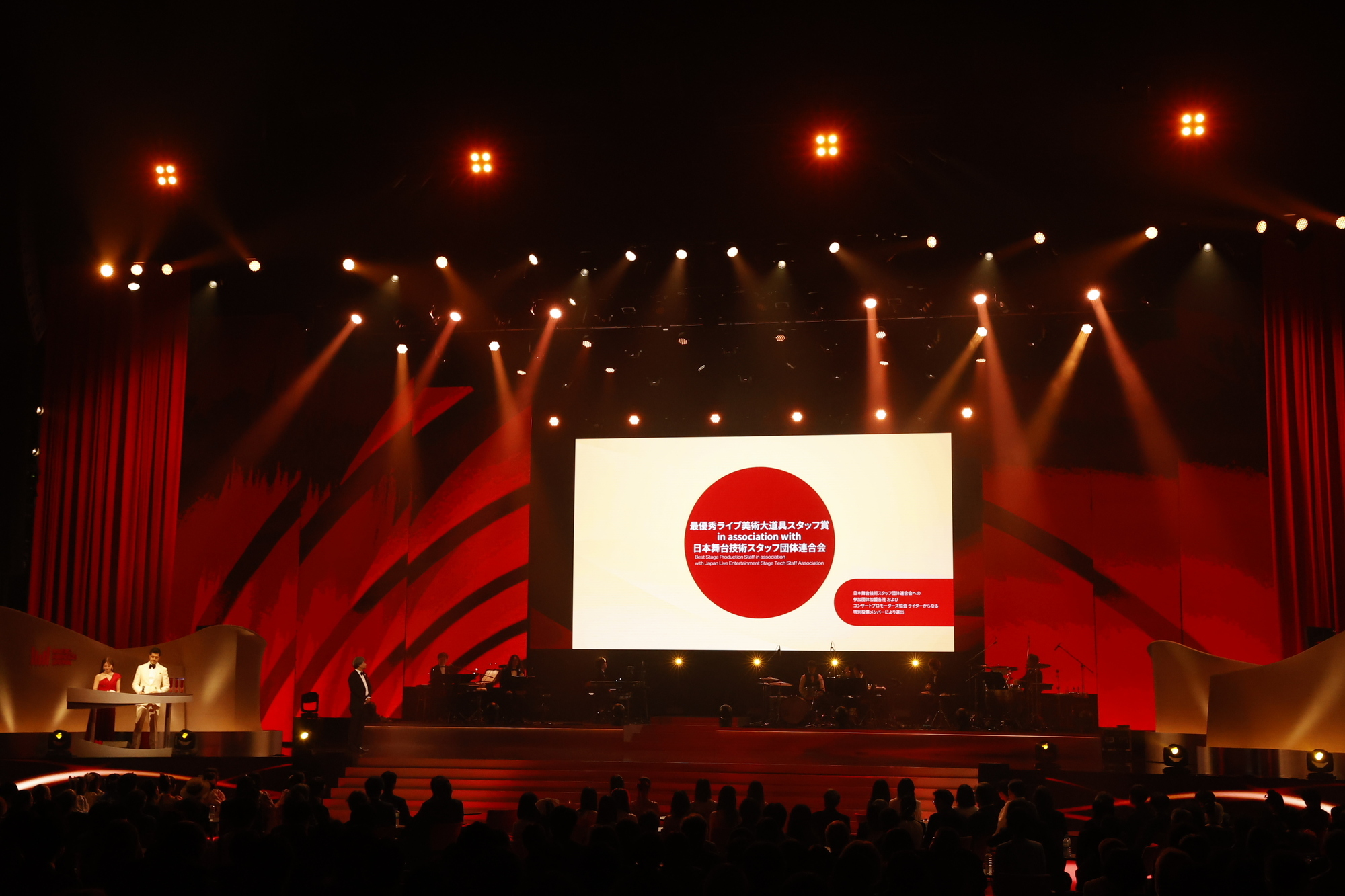
Scenes from the "MUSIC AWARDS JAPAN 2026" Premiere Ceremony.
—Do awards like this help motivate people working in the industry?
Minowa: Definitely. More than anything, I hope this award encourages more young people to take an interest in the industry. I think it has real potential to do that.
Yasui: I think people who aren't familiar with the industry tend to associate stagehands and set construction with physically demanding labor. Hopefully, awards like this can help people see the more exciting and glamorous side of what we do.
Who Thrives in Stage Production?
—For young people who might be interested in this industry, what's the most rewarding part of your job?
Yasui: For me, it's the moment a concert begins. When the band members walk onto the stage we've built and the whole venue erupts in cheers, that's when I really feel like all the hard work was worth it. Once you've experienced that feeling, it's hard to walk away from this job, no matter how tough the day-to-day work gets [laughs].
Minowa: From a sales perspective, the most rewarding part is when one project leads to another. Of course, I also get the same satisfaction Yasui just described. But when you've worked hard to make a project happen, including figuring out how to cover the costs, and someone comes back to you with another opportunity, that's when you really feel like your efforts have paid off.
That's actually how we ended up working on this Mrs. GREEN APPLE tour. We'd worked with Ota on a different project before, and he specifically asked us to work with him again. It meant he was happy with what we'd done and trusted us to deliver. That kind of recognition makes you even more determined to do a great job the next time.
—What kind of person do you think would enjoy this kind of work?
Minowa: Someone who's energetic, open-minded and eager to learn. It's a pretty unusual line of work, so you need to be flexible and willing to absorb new things. A lot of what you learn in school doesn't really apply here [laughs].
Yasui: It's also a job where you're never doing exactly the same thing twice. Even on the same tour, the way you build the stage changes from venue to venue. You might do something similar, but it's never identical.
I think people who enjoy that variety, who stay curious and find each new challenge exciting rather than frustrating, are well suited to this kind of work.
Minowa: These days, with video-based stage production becoming the norm, the traditional stage scenery industry is shrinking in some ways. Mrs. GREEN APPLE is actually going against that trend.
Of course, their show made extensive use of video as well, but building such an enormous physical set has become pretty unusual. You could argue that this is exactly what makes it so valuable.
At the same time, as fewer productions are willing to invest that kind of money in physical sets, I think one of the biggest challenges for our industry is figuring out what value we can offer going forward.
Yasui: A lot depends on how trends change, and nobody really knows what will happen next. I think our job is to keep finding creative solutions and new ways of doing things, even with all that uncertainty.
Minowa: Exactly. We need to think about what might become popular next and how we can incorporate new ideas into our work.
If more young people come into the industry with fresh perspectives and a strong sense of what they want to create, I think that could really help move the industry forward. I'd love to see more people like tha