
What Does a Stage Manager Really Do? A Conversation with 90-Year-Old Industry Legend Hiroshi Kaneichi | MUSIC AWARDS JAPAN 2026 Winner Interview
Launched in 2025 under the concept “Connecting with the world, illuminating the future of music,” MUSIC AWARDS JAPAN (MAJ) is Japan’s largest international music awards, established by the Culture and Entertainment Industries Promotion Association (CEIPA), an organization formed by five major Japanese music industry associations.
Held in June, MAJ 2026 expanded to 78 categories, including newly established awards recognizing the professionals working behind the scenes of concerts and live events. Alongside the artists and creators shaping Japan’s music industry, the awards also shone a spotlight on the people who bring live performances to life.
OTOMO spoke with Hiroshi Kaneichi of Create Osaka Co., Ltd., who received the Live Production Staff Achievement award in recognition of his longstanding contributions to live music production, alongside his colleague Shingo Nagano.
Now 90 years old, Kaneichi is a pioneering figure who helped establish the role of stage manager in Japan’s music industry. Together, they reflect on how stage management has evolved over the decades, share stories from behind the scenes, and offer their candid perspectives on today’s music industry and MUSIC AWARDS JAPAN.
Interview by Kyu Nakanishi
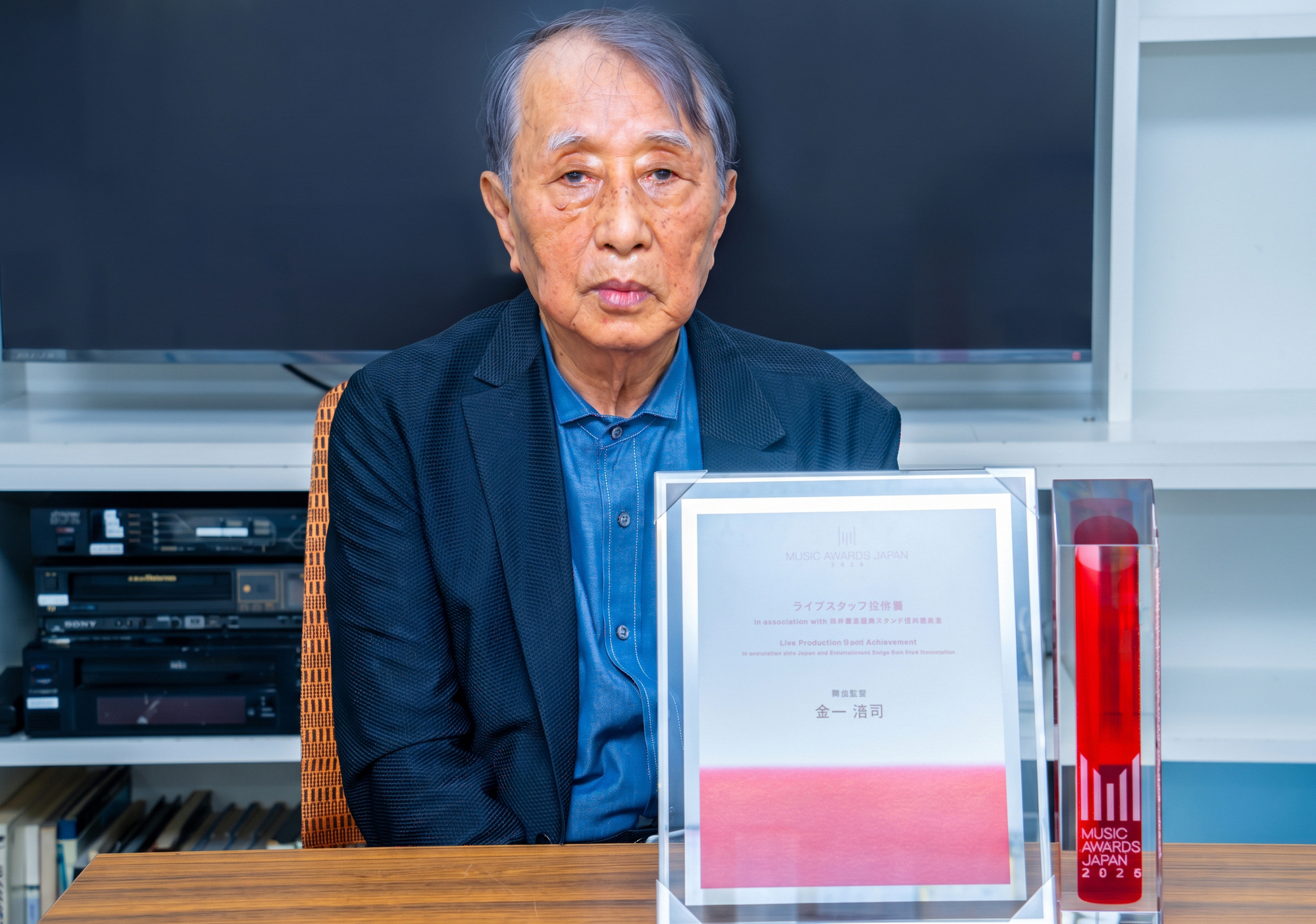
I’m Not Sure What a Stage Manager Does Anymore
—So, what exactly does a stage manager do?
Hiroshi Kaneichi: Well, the job has changed a lot over the years. It originally came from a role in kabuki theater called kyogen-kata, which involved moving stage sets around.
Back then, you'd have a hammer and a measuring tape hanging from your waist. You'd use wooden boxes called hakouma to build the foundations of a room, then stretch fabric over wooden frames to make the walls. You could take everything apart, rearrange it, and repaint it for the next show.
It's a very Japanese way of doing things, and incredibly economical. It still makes perfect sense today.
They don't really do that in Europe. With opera, for example, they build a set for a production and then keep it in storage. Maybe they've just got more space over there.
Anyway, because we inherited that kabuki tradition, we started out learning the ropes from the stage carpenters. Whenever we arrived at a theater, the first thing we did was go and say hi. If you didn't, they'd give you a pretty hard time.
Shingo Nagano: Well, that's how things used to be [laughs].
Kaneichi: But if you showed them respect, they'd go out of their way to teach you.
These days, the bars used to hang scenery and equipment above the stage are motorized. Back then, we had to operate everything by hand. We'd adjust the counterweights to raise and lower things, and we were responsible for moving parts of the stage up and down, too.
There was a lot of technique involved. That's why we used to work in tabi socks and traditional sandals.
Nagano: Because you were actually up onstage doing the work. Stage managers were much more hands-on back then.
Kaneichi: Then, toward the end of the Meiji period, modern Japanese theater emerged, bringing European theater practices together with Japanese traditions. That was one big change.
Another came after the war, when jazz, rock and roll and other music from overseas started arriving in Japan. That led to a whole new kind of live entertainment.
Stage managers who'd been working in kabuki and theater suddenly found themselves working on music shows, too. Even playing music on a tape recorder during rehearsals became part of the job.
Microphones started coming into use around the time of Shizuko Kasagi, the singer whose life inspired the popular TV drama Boogie Woogie. And when a singer walked around the stage, someone had to keep the microphone cable from getting tangled. That was usually us.
Nagano: Not the best tradition to inherit [laughs]. Thankfully, most microphones are wireless now.
Kaneichi: So we had to learn about sound as well as scenery.
I learned a lot from Rokunosuke Ei. When I worked on a show with Kyu Sakamoto, he taught me tsuke, a kabuki technique where you strike wooden blocks to add sound effects to an actor's movements. We even did that at pop concerts.
And then there was lighting. It used to be as simple as making the stage brighter or darker. But suddenly you could change the colors, move the lights around, do all sorts of things. Before long, you couldn't tell whether it was the scenery or the lighting that was creating the stage.
A little sad, if you ask me. But of course, we had to learn all that new technology, too.
So the job just kept growing. There was always something else we needed to know.
Nagano: These days, a stage manager is basically the person who makes sure the director's vision actually happens onstage.
Back in Kaneichi's day, there were professional directors who specialized in live performances. Later, TV directors started directing concerts on the side. And now, artists often direct their own shows.
Whoever comes up with the ideas, it's our job to understand what they want and figure out how to make it happen. That means coordinating the sets, lighting, sound, special effects and everything else.
We have to keep both the technical side and the show itself running smoothly, and make sure everything happens on time. At the end of the day, the audience needs to be able to see the show when it's supposed to start. That's probably our biggest responsibility.
Kaneichi: The funny thing is, as our responsibilities grew, the actual work we did became more limited.
We used to do a bit of everything, but as technology advanced, things became more and more specialized. I suppose that's true in any industry these days. There's so much going on that it's hard for any one person to understand every little detail.
So now, instead of getting our hands dirty, we mostly stand back and oversee the whole production. There are even separate people in charge of running the show.
In the past, if someone asked me what a stage manager did, I could simply say, “We do a bit of everything.”
But these days? I honestly don't know how to answer that question anymore. That's how complicated the job has become.
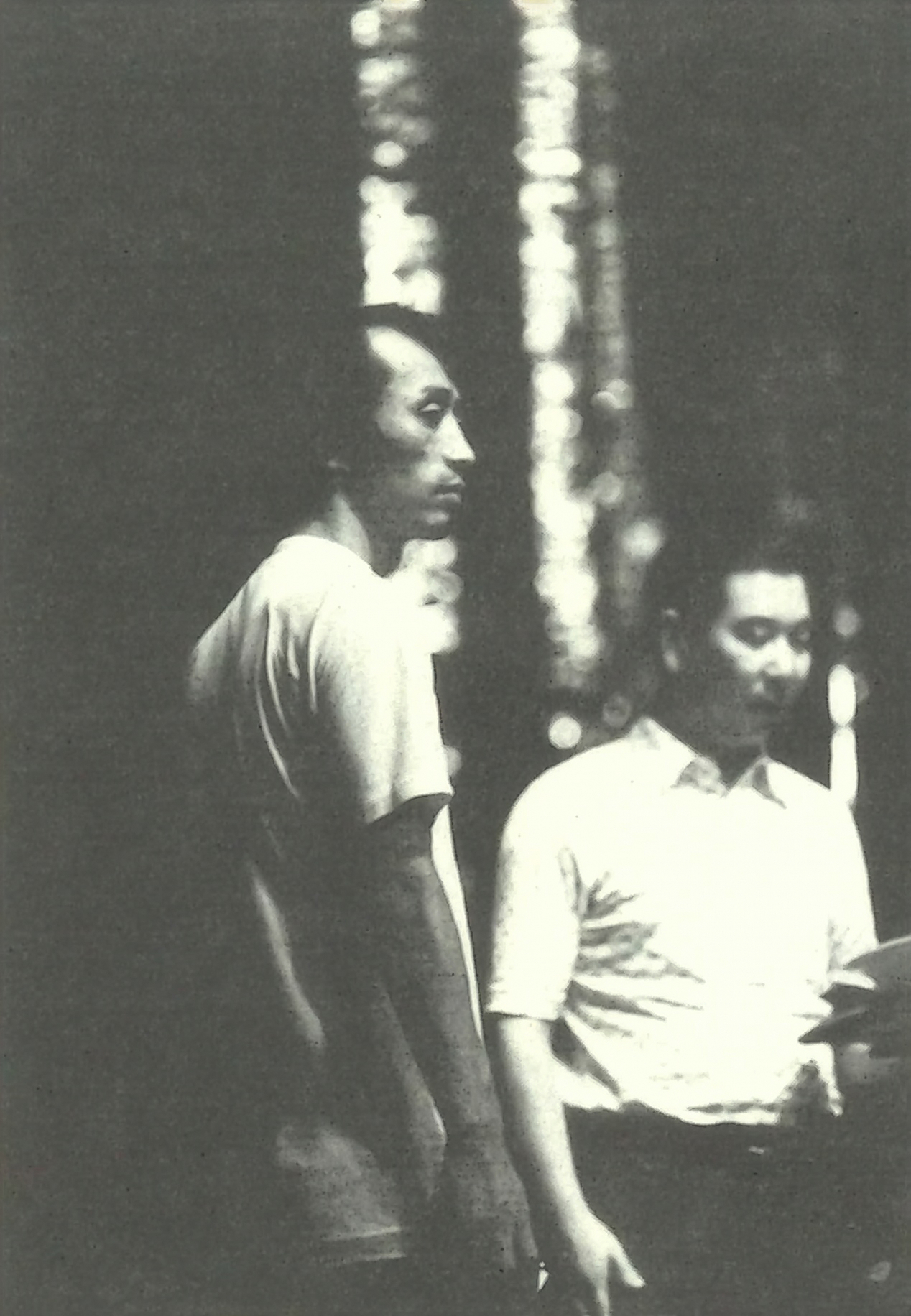
Hiroshi Kanichi around 1970.
Making the Impossible Possible
Nagano: You don't actually need any qualifications to become a stage manager. Technically, anyone could wake up tomorrow and call themselves one.
But the problem is, when that happens, all the knowledge and experience that people like Kaneichi have built up over the years can get overlooked. That's why we're now pushing to make stage management a nationally recognized qualification in Japan.
For example, if you're telling someone to hang equipment from a particular point, you need to understand structural engineering to make sure it's safe. That's the kind of knowledge we think should be mandatory.
Concerts and live productions are getting bigger and more complicated, and keeping everyone across all the different departments safe is becoming one of the most important parts of a stage manager's job.
Kaneichi: Right.
Nagano: We also want to make sure stage managers are properly paid for what they do.
Overseas, technical directors are an established profession, with clearly defined fees for each show. We'd like to see stage managers in Japan treated in a similar way. Otherwise, why would the next generation want to do this job?
You're expected to know about all sorts of things, you get told off if you don't, and if there's an accident, you're the first person the police come looking for.
Who'd want a job with that much responsibility and no guarantee of being properly compensated?
If things carry on like this, we could end up with an industry that simply doesn't have enough qualified people to put on shows properly.
Kaneichi: Speaking of money, stage managers also need to understand how much it costs to put on different kinds of shows.
In a way, we were lucky to grow up in the postwar years, when nobody really knew how to do any of this. We had to figure things out as we went along: how much time and money something new would take, how big an audience we could attract, and what kind of people we'd need to make it happen.
I started working part-time on stage productions at Osaka Roon, now known as Osaka Shinon, about 65 years ago. I learned everything bit by bit through trial and error. Of course, I made some terrible mistakes along the way, but I learned a lot from them.
Nagano: The funny thing is, stage managers probably have the hardest time becoming directors, because they know better than anyone how difficult it is to put on a show.
Directors are always making crazy requests, aren't they? [laughs]. They'll suddenly come up with something like, “I want stars to fall from the sky over there!”
But a stage manager knows exactly how much time and money that would take. So when they become directors themselves, they end up being far too reasonable. They stop asking for the impossible.
Kaneichi: I've always believed that directors should be allowed to make unreasonable demands. Because sometimes, if you work hard enough, you can actually pull off something that seems impossible.
Nagano: That's true [laughs].
Kaneichi: Let's say a director comes up with some completely outrageous idea. It's up to the stage manager to figure out how to make it happen, whether that means spending more money, putting in more time, or finding a clever technical solution.
But I think it's important to give those ideas a chance. You never know what amazing things might come out of them.
Of course, I'm only human. If someone keeps making ridiculous demands, I'm going to get annoyed sometimes, too [laughs]. But I do think we need people who come up with those kinds of ideas.
Nagano: So the stage manager's job is to find a way to make those seemingly impossible requests happen.
Why MUSIC AWARDS JAPAN Matters
—So, what do you find most rewarding or enjoyable about being a stage manager?
Nagano: That's probably the hardest question you could ask us [laughs].
Kaneichi: Well, if anything, I think stage management is becoming a less exciting profession.
In the old days, people would go to a theater in their hometown, see the crews working away onstage and think, “Wow, that looks cool. I want to do that!” Then they'd pack up and move to Tokyo or Osaka to get into the business.
Back then, stage work attracted people who didn't want to spend their lives in an office, doing boring jobs just because their bosses told them to. To put it bluntly, we were a bit of a rebellious bunch.
You don't really see that anymore. These days, people study stage production at theater schools and then enter the industry. But sometimes they don't have that same passion for the work, so they quickly realize it's not for them and leave.
I imagine that's happening in other professions, too. But I think the big question is whether we can make stage management a job that people look at and think, “That's cool. I want to do that,” again.
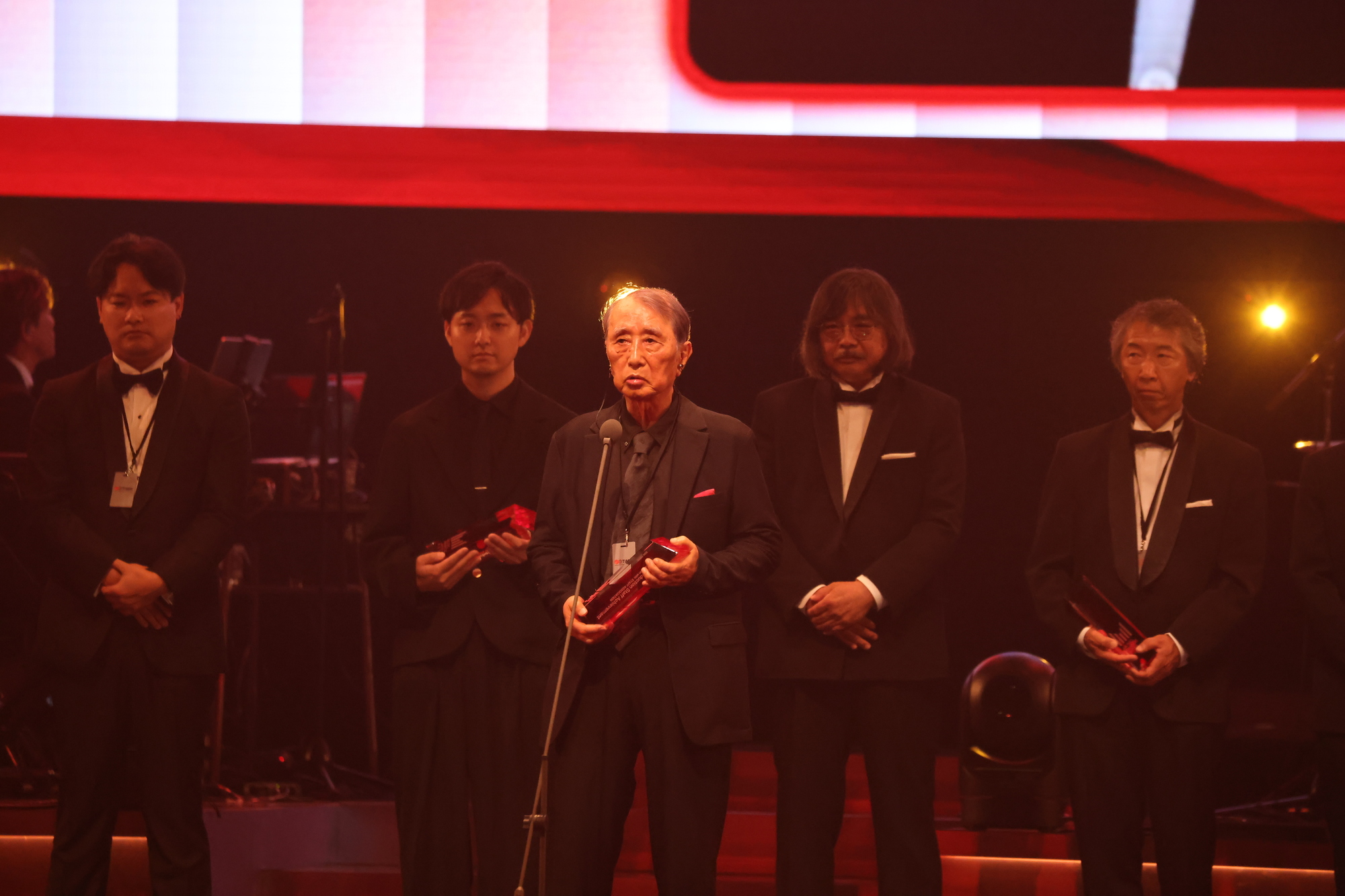
Hiroshi Kanichi took the stage at the “MUSIC AWARDS JAPAN 2026” Premiere Ceremony.
—Could awards like the Live Production Staff Achievement award you received at MUSIC AWARDS JAPAN 2026 help make that happen?
Kaneichi: Absolutely, if people recognize the award as something valuable. But we're not there yet, are we?
I know everyone involved is putting a tremendous amount of effort into it, figuring things out as they go. And I appreciate how difficult that must be.
But the average person is probably going to ask, “How is this different from all the other music awards?”
Unless you create something that really stands out and makes an impact, people aren't going to pay much attention.
Remember how AKB48 used to hold those elections where fans voted for their favorite members? They got everyone talking. I think MUSIC AWARDS JAPAN needs to find a way to capture that kind of public interest if it wants to become widely recognized.
Though perhaps I shouldn't be saying all this when I've just received an award myself [laughs].
Nagano: The thing is, people still say that the popular music industry we work in isn't really part of culture. Traditional performing arts like kabuki, along with opera, ballet and classical music, are considered culture, while pop music is seen as just entertainment.
For example, during the pandemic, when we tried to apply for government subsidies, we discovered that stage managers didn't even have an official occupational classification code. Film directors were recognized as a profession, but stage managers weren't.
That's why I think it's so important to establish popular music and the work we do as a legitimate part of culture.
Kaneichi: Well, there's not much point asking old people like us to do anything about it now. We'll just have to leave it to the younger generation.
Nagano: Kaneichi is 90, after all.
—So, can we end the interview by saying you're counting on the younger generation?
Kaneichi: Of course. However you like.
Nagano: Gladly! [laughs]