
How sakanaction Creates Immersive Live Sound: An Interview with MUSIC AWARDS JAPAN 2026 Winner Sachio Sasaki
Launched in 2025 under the concept “Connecting with the world, illuminating the future of music,” MUSIC AWARDS JAPAN (MAJ) is Japan’s largest international music awards. MAJ 2026 expanded to 78 categories, including newly established awards recognizing the professionals working behind the scenes of concerts and live events.
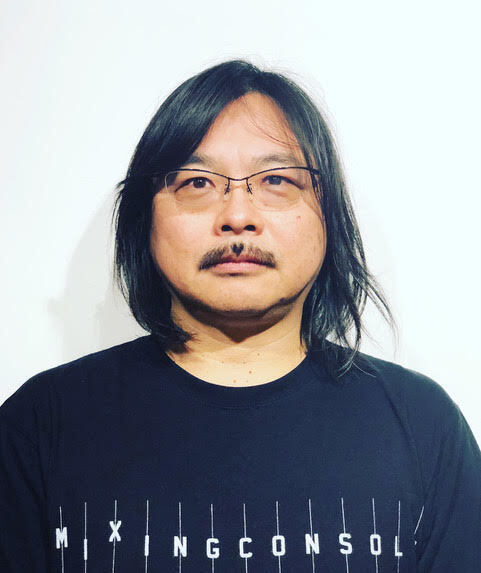
We spoke with live sound engineer Sachio Sasaki, who received the Best Sound Production Staff award for his work on sakanaction’s SAKANAQUARIUM 2025 “Kaiju” tour. From the philosophy behind “speaker+,” a sound system designed to eliminate acoustic “blind spots” throughout the audience, to what makes working in live sound so rewarding, Sasaki takes us inside the craft of live sound engineering.
Interview and text by Kyu Nakanishi
A New Kind of Recognition for Live Sound
—To start, could you tell us a little about what you do?
I’m a live sound engineer. More specifically, I work in the front of the house (FOH),, mixing the sound the audience hears at live shows.
—Who are some of the artists you’ve worked with?
There are quite a few. Aside from sakanaction, I’ve worked with Shintaro Sakamoto, Hitsujibungaku, Denki Groove, Kaneko Ayano, OGRE YOU ASSHOLE, D.A.N., THE SPELLBOUND and TESTSET, among others. I also worked with Yellow Magic Orchestra (YMO) in their later years. A lot of my work tends to be with electronic and alternative artists.
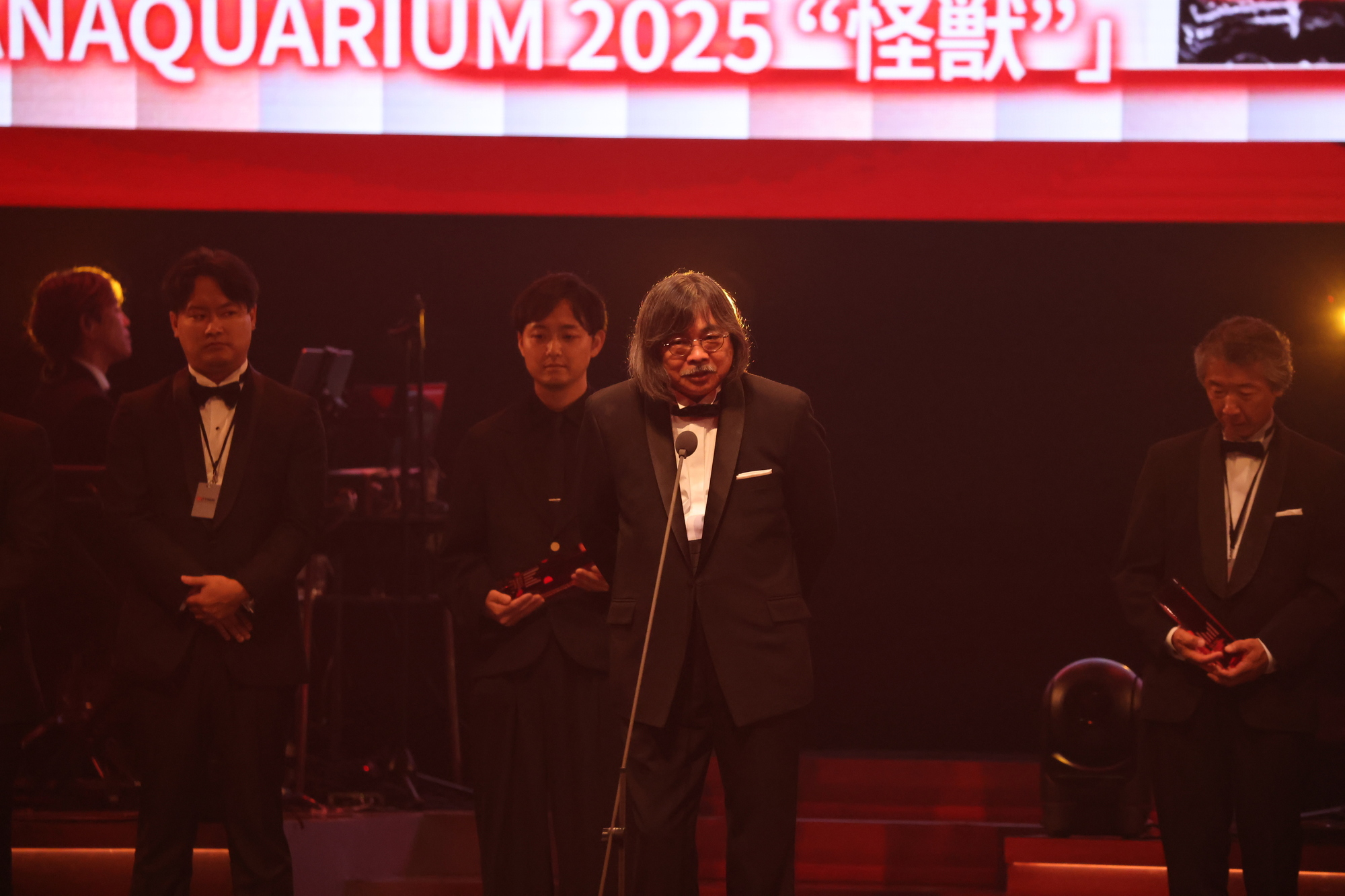
—You and your colleagues Hirotomo Kasai and Yoshiki Yagi received the Best Sound Production Staff award at MUSIC AWARDS JAPAN 2026 for sakanaction’s SAKANAQUARIUM 2025 “Kaiju” tour. What was your reaction to winning?
I was simply really happy to see the work we’ve been doing recognized. There’s never been an award like this before, and now that production staff can be recognized too, I think it gives people in the industry something new to aim for.
—Has the award generated much discussion within the industry?
There was definitely some buzz when it was announced [laughs]. Nobody really knew how you got nominated, and I don’t think people fully understood what the award was yet. But after this year’s ceremony, I think a lot more people became aware of it.
—What kind of response have you had since winning?
So many people have congratulated me. I’m always working at different venues, and especially during summer festival season, I’m somewhere different pretty much every week. A lot of fellow sound engineers have come up to me at those events to congratulate me.
—So a lot of people in the industry know about it now.
Yeah. Most people seem to know about the award and that I won it. I think there’s a lot of curiosity around it simply because nothing like it existed before.
Eliminating Acoustic Blind Spots
—What do you think was recognized with this award?
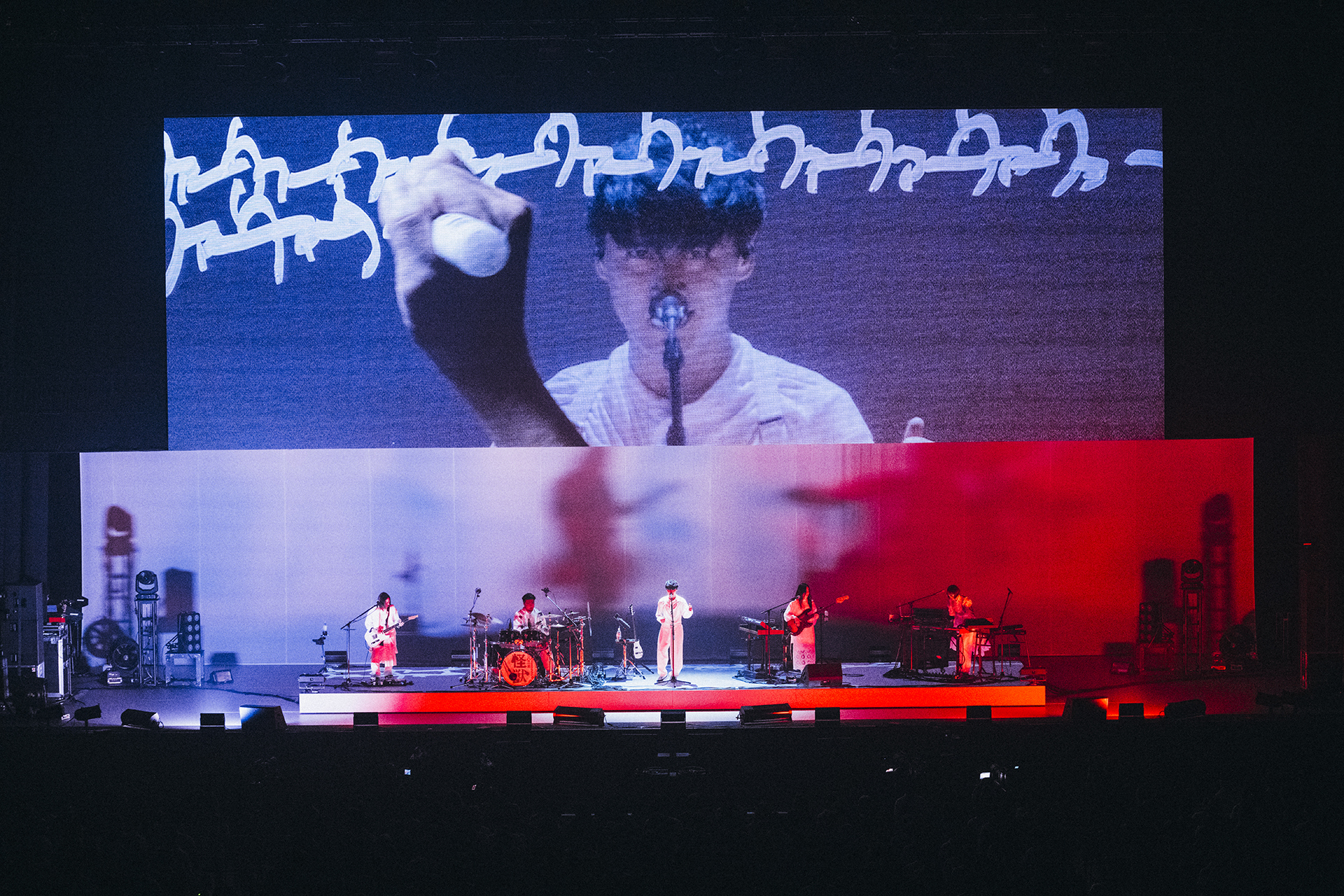
For sakanaction’s shows, we’ve developed our own sound system called “speaker+.” Rather than relying solely on the standard left and right main speakers, we use additional speakers to provide coverage throughout the entire audience. We describe the idea as “eliminating acoustic blind spots,” and I think that was probably a major reason we received the award.
—Can you elaborate on that?
The goal is to make sure the sound is good no matter where you’re sitting. In addition to the main left and right speakers flown on either side of the stage, we fly additional speakers aimed at seats to the sides and rear so that the quality of the sound doesn’t depend on where you happen to be sitting. If you’ve been to a sakanaction show, you’ve probably noticed that there are speakers almost everywhere.
—So a conventional setup inevitably leaves some blind spots?
Exactly. Sound naturally gets quieter the further it travels, so in a large venue there will inevitably be seats where it feels distant. And even if you’re physically close to the stage — in the front rows or in the stands to either side, for example — the sound can still feel distant if the speakers aren’t pointing toward you.
That’s why we place lots of smaller speakers along the front of the stage and fly additional speakers facing out to the sides. We end up using around 200 speakers for each show.
—Two hundred!
We don’t want anyone to feel like getting a seat farther from the stage means settling for a worse sound. Wherever you are in the venue, you should be able to lose yourself in the show. I think that effort to make every seat feel like a good seat may have been part of what was recognized.
—So the idea is to remove anything that might take people out of the experience.
Exactly. And we can do that now because the technology has come so far. In the past, concert sound was largely about stacking speakers on either side of the stage. If you were farther away, you simply had to accept that the sound wouldn’t be as good. There wasn’t much you could do about it.
Today, we can be much more precise about how we cover a venue. But that also means a lot more preparation. There’s more equipment to deal with, and we run simulations before each show to see how sound will travel through the space. We take the shape and acoustic characteristics of the venue into account, then work out where each speaker needs to go. It’s a time-consuming process.
—And when it works, the audience doesn’t have to think about any of that.
Exactly. The goal is for them to be completely immersed in the show. If we’ve done our job well, they shouldn’t have to think about the sound at all.
—Does it ever bother you that your work might go unnoticed because of that?
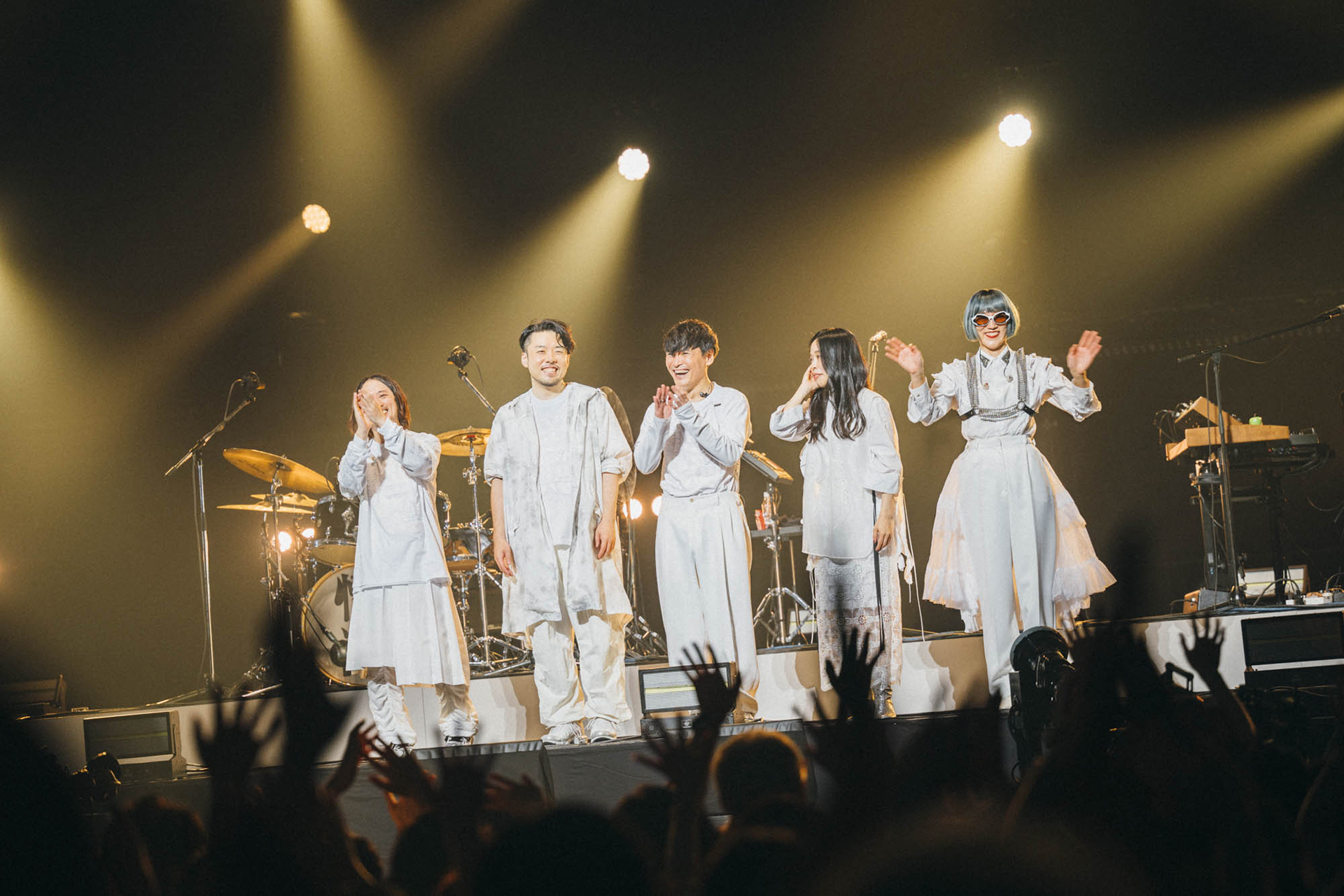
Not at all. sakanaction has always put a lot of emphasis on sound, and the audience is very aware of that too. We actually get a lot of positive feedback (laughs). Sometimes people even come up to the FOH desk after the show to tell us how much they enjoyed the sound.
—That says a lot about sakanaction fans.
Yeah. A lot of them really know their stuff.
The Artist Never Hears What the Audience Hears
—What do you need to understand about an artist to get their live sound right?
You need to understand what kind of sound they want and what their music is about. Whether it’s rock, jazz or techno, every kind of music has its own character. Our job is to understand that and shape the sound accordingly.
Ideally, I can talk to the artist directly. But sometimes they don’t have any specific requests and leave it up to us. In those cases, I work from my own interpretation of their music.
—Do artists really leave that much up to you?
Sometimes, especially young artists. They may not know exactly what they want yet.
—Or they might know what they want but not know how to articulate it.
Exactly. And the artist can never actually be in the audience to hear what the show sounds like while they’re performing. At some point, they have to trust us with that.
They can’t hear the show from the audience’s perspective themselves, so they rely on feedback from people around them about what worked and what didn’t, and we make adjustments from there.
Working with Other Production Teams
—How closely do you work with the lighting and stage design teams?
With sakanaction, we’ve built a team where everyone is comfortable giving each other feedback. I might suggest a change to the lighting from an outside perspective, for example, or we’ll discuss where equipment needs to go. There are physical constraints as well as musical considerations, so everything has to be worked out carefully in advance. The stage manager plays a central role in coordinating all of that.
—Do the priorities of different teams ever conflict?
Not so much with sakanaction because most of us have been working together for a long time, but there can be competition for space. The artist’s vision ultimately comes first. If there’s a piece of equipment that absolutely needs to be in a particular place, for example, everything else has to be planned around it.
So we talk things through and find the best compromise. Sometimes that means one side has to give a little.
—How do you decide what to compromise on?
A lot of it comes down to the physical limitations of the venue. In a large arena, you might be flying a huge amount of sound and lighting equipment, and sometimes the total load exceeds what the venue can support. Then we have to work through the details in advance: Can we remove a speaker? Can the lighting team use something lighter?
Whether we prioritize the staging, lighting or sound ultimately depends on what the artist is trying to express with the show.
—So sometimes sound has to take a back seat, even if you know you could make it better.
Yes. Some venues have very strict rigging limits or other restrictions, so you simply have to figure out what you can do within them.
With some newer venues, though, those limitations are becoming much less of an issue. LaLa arena TOKYO-BAY in Chiba, where sakanaction will perform next year, has plenty of load capacity and electrical power, so there are very few restrictions on the equipment we can use. It’s primarily a basketball arena, but it was clearly designed with concerts and other events in mind as well.
—So advances in sound technology only go so far if the venue can’t support them.
Exactly. We’re seeing more well-equipped arenas with capacities of around 10,000 opening across Japan now, which makes a huge difference for us.
Live Sound Isn’t Going Away
—With both technology and venues evolving so quickly, how is the job itself changing?
Live sound has traditionally been almost entirely temporary. You arrive at an empty venue, bring in the speakers, amps and mixing consoles, set everything up, then take it all down again after the show.
But a lot of newer venues now have permanent sound systems, with speakers already flown. SGC HALL ARIAKE and MoN Takanawa are good examples. That saves a lot of time on setup and teardown. The downside is that you can’t position the speakers wherever you want [laughs], but it makes the whole process more efficient and helps reduce working hours. The equipment itself is getting better too, so I think moving in that direction makes sense.
—Is there still much room for the technology to improve?
I think we’ve already come a long way, but there’s still plenty more to come. AI is starting to make its way into live sound, with things like real-time pitch correction and feedback suppression. At the moment, the processing isn’t quite fast enough to make some of these applications practical, but as computers get more powerful, I think we’ll see them used more and more in live settings. And once those tools become easy for anyone to use, things will move even faster.
—So AI is making its way into live sound too.
It is, but at the end of the day, the sound still has to come out of a speaker. That basic principle hasn’t changed in decades: you move a cone to create sound waves and deliver them to the audience.
The equipment has become smaller and lighter, and a lot of the processing is becoming more efficient and automated. But as long as that fundamental mechanism stays the same, I don’t see the role of the live sound engineer disappearing.
—And even if technology makes the job more accessible, the person behind it still makes a difference.
Absolutely. A huge difference.
When Everything Comes Together
—For someone thinking about a career in live sound, what would you say makes the job worth pursuing?
For me, it’s the sense of everyone coming together. A live show exists in a particular time and place, and there are moments when the artist, the crew and the audience all seem completely in sync. That’s incredibly satisfying.
And then you see people leaving the venue smiling afterward. It doesn’t happen perfectly every single time, of course, which is exactly why it feels so special when everything does come together. There’s really nothing else like it.
—What’s the hardest part of the job?
There are things you don’t really understand until you start doing it. The most obvious one is that the equipment is heavy [laughs], so it can be physically demanding. The days start early and finish late too, and that can be enough to put some people off.
You need to really believe in what you’re doing to stick with it. Most people don’t have to lift something weighing 80 kilos in their everyday lives, but for us, that can be completely routine. The reward comes after all of that hard work.
—So who tends to thrive in this kind of work?
Someone who genuinely enjoys it. Or maybe someone who doesn’t even see the hard parts as a hardship [laughs]. The people who can just accept that this is part of the job tend to last longer.
You also get to travel all over Japan, so it might be a good fit for someone who enjoys being on the road.