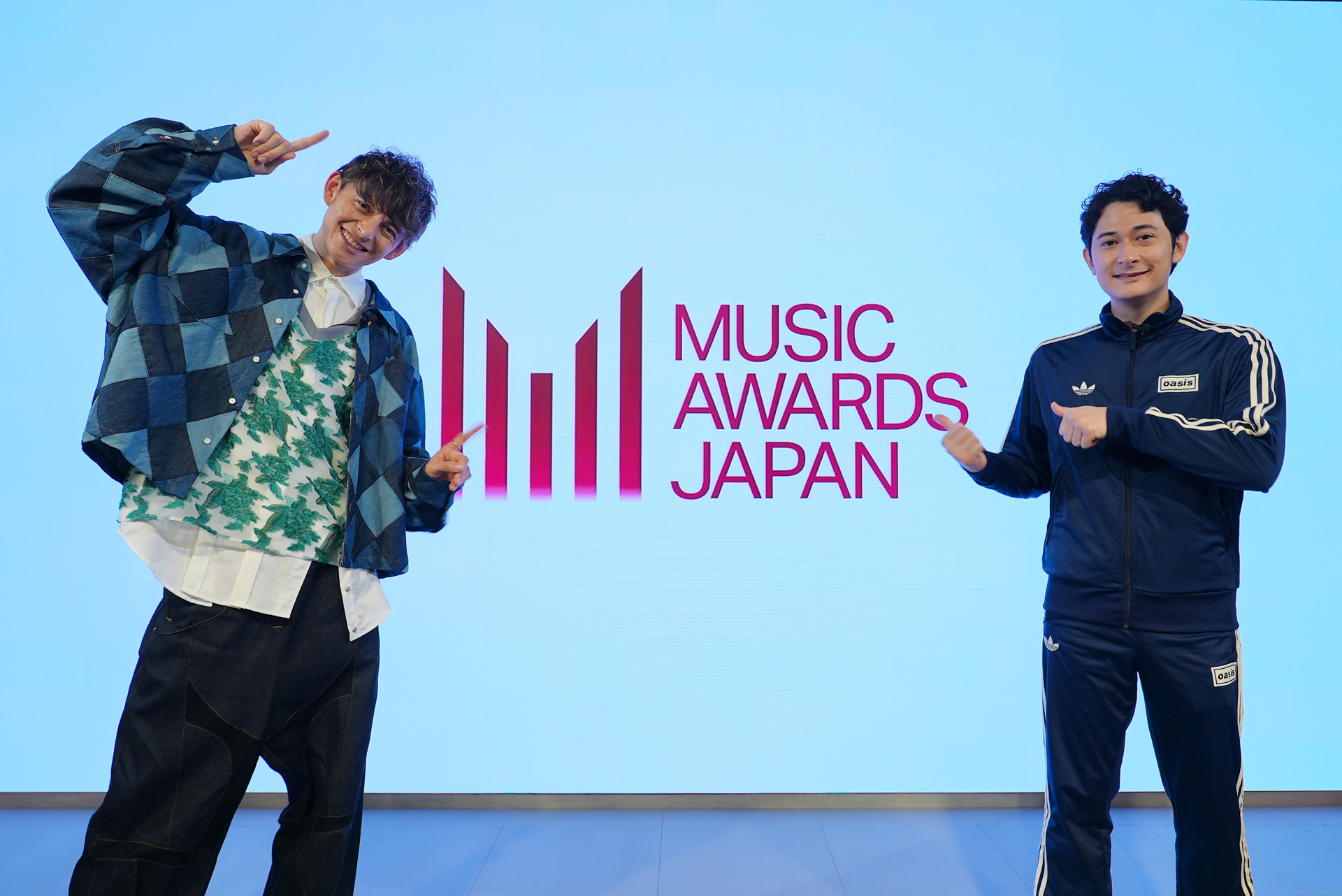
OTOMO launches Deep Insights series exploring today’s music genres. The first episode features YouTuber and musician Mino on rock and alternative
Japan’s largest music awards, MUSIC AWARDS JAPAN, was established in 2025 by the Culture and Entertainment Industry Promotion Association (CEIPA). It’s a general incorporated association founded by the five major Japanese music industry organizations: the Recording Industry Association of Japan, the Japan Association of Music Enterprises, the Federation of Music Producers Japan, the Music Publishers Association of Japan, and the All Japan Concert & Live Entertainment Promoters Conference. It is held under the concept: “Connecting with the world and illuminating the future of music.”
This award was established with the aim of becoming Asia’s counterpart to the Grammy Awards. Submitted works are automatically moved forward based on objective metrics gathered from Billboard Japan and the Oricon music charts. From there, voting determines five nominees in each category, as well as eventual winners.
Voting is carried out by approximately 5,000 music industry professionals across various fields. They include artists, creators, record label staff, concert promoters, music publishers and judges from international music awards.
In addition to the six major categories (Song of the Year, Artist of the Year, New Artist of the Year, Album of the Year, Best Global Hit from Japan, and Best Song Asia), there are also genre-specific awards, awards for international works and honors recognizing behind-the-scenes contributors such as “Best Music Video Director” and the “Grand Prix Engineer Award.” There are also awards determined by public voting and special karaoke awards, making the judging criteria extremely diverse. This year, 14 new categories have been added. These comprehensive and detailed regulations clearly reflect the ambition to become the definitive popular music awards in Japan.
In its second year, the awards ceremony will be held on June 13 at TOYOTA ARENA TOKYO in the capital’s Odaiba area . Entries were announced on March 19, with the first round of voting beginning the same day. After the nominees selected through this process are announced on April 30, final voting will take place until May 20.
The significance of MUSIC AWARDS JAPAN
Prior to this, a new program titled “OTOMO presents MUSIC AWARDS JAPAN -Deep Insights-” launched on the official YouTube channel of MUSIC AWARDS JAPAN / CEIPA. Centered around the theme “What is happening in the music scene right now?”, it is a talk show in which host Harry Sugiyama invites a different expert guest each episode to explore the current state of various music genres.
The first episode features music-focused YouTuber and musician Mino as a guest. The discussion focuses on the MAJ categories “Best Rock Song” and “Best Alternative Song.” In addition to reflecting on the past year and looking ahead to the current one, the conversation also touches on genre theory, touching on topics such as “What is the difference between rock and alternative?”

Their chat began with the topic of the significance of the “MAJ (MUSIC AWARD JAPAN).” Showing respect for the half-British Harry, Mino wore an Oasis tracksuit set. He explained that he had long hoped for the establishment of a large-scale and authoritative award like this.
“I think something like an ‘important and prestigious authority’ is actually necessary. It can also be something people want to rebel against, but that’s exactly what has been missing from Japan’s music scene until now. In an era where music is seamlessly connected to the world, having something within Japan that clearly says ‘this is good’ gives a kind of backbone, it makes things easier to understand,” he argued. He expressed the view that, in today’s rapidly globalizing music scene, it is highly meaningful for Japan to officially establish a kind of “standard” to present to the world.
Harry pointed out that this sense of authority was evident in the glamorous opening ceremony of last year’s “MAJ 2025” awards, and Mino agreed. Soundtracked by a reworked “Rydeen” by Yellow Magic Orchestra, the impressive segment featured a succession of Japanese artists, creating a dazzling performance that showcased the country’s high cultural standards, something both of them spoke about with visible excitement.
“I think we’re living in a truly fortunate time”
Next, the two looked back on last year’s nominees. For the inaugural “Best Domestic Rock Song” award, Omoinotake, Vaundy, 10-FEET, and Mrs. GREEN APPLE were nominated, with King Gnu’s SPECIALZ taking the award. In the “Best Domestic Alternative Song” category, among nominees such as TOMOO, Rikon Densetsu, Mega Shinnosuke and jo0ji, it was Hitsujibungaku’s “more than words” that came out on top.
Looking at that lineup, Mino said with a smile, “I really think we are living in a wonderful time.” He reflected that he hadn’t really connected with the artists who were popular during his own youth, adding, especially about the “alternative category” “If I were a teenager in today’s era, it would be incredibly exciting. Music like this exists in the mainstream, is easily accessible, and is even recognized at awards shows. I think that kind of environment is incredibly healthy.”
They also noted that both “SPECIALZ” and “more than words” were released in 2023. Because last year marked the first edition of the MAJ, eligible songs came from different years. This year, however, eligible songs are limited to those released between January 1 and December 31, 2025, leading them to expect a lineup that feels more reflective of the current moment.

In a good way, Japan has cultivated a uniquely self-contained culture
The conversation then moved into more philosophical territory: “What exactly is the difference between rock and alternative?” Citing bands such as R.E.M., Sonic Youth, and Jane's Addiction, Mino explained that alternative rock began when local bands, distinct from mainstream artists, started gaining popularity. This movement later influenced bands like Nirvana and Soundgarden, reaching its peak in the 1990s.
In other words, genres such as grunge, rap rock, shoegaze and Britpop are all broadly grouped under the umbrella of “alternative,” making it too wide-ranging to be neatly defined as a single genre.
Turning to Japanese artists, Mino noted that Shibuya-kei, groups such as Flipper's Guitar, garage-style bands like THEE MICHELLE GUN ELEPHANT and BLANKEY JET CITY, artists outfits like Yura Yura Teikoku, and even uniquely styled folk rock acts such as Tama could all reasonably be considered “alternative.”
“With that kind of foundation in place, even artists who achieved massive mainstream success, like Sheena Ringo, could still be seen as alternative. It was an exciting era,” he said, summing up the 1990s.
Ultimately, “alternative” was originally just a subset within the broader category of “rock,” meaning it’s not something that can be clearly defined by saying, “this is exactly how rock and alternative differ.”
Even “rock” itself (here treated as roughly synonymous with “band music”) is no longer part of the mainstream globally. Especially in Western charts, artists who perform as groups playing instruments have become increasingly rare. Against that backdrop, Mino described the curious phenomenon of rock bands continuing to proliferate in Japan as “a kind of Galápagos effect in a positive sense.”
He suggested that Japan’s music industry has historically had a sufficiently large domestic market, meaning there was little need to look overseas. As a result, a unique scene developed that was less influenced by global trends. Within that context, he pointed to acts such as Otoboke Beaver as distinctive examples of artists gaining recognition abroad outside of the anime-song sphere, and expressed optimism about the growing number of Japanese bands with international potential.
Artists Mino has high expectations for
Finally, when asked which artists he expects to be nominated for “Best Rock Song” and “Best Alternative Song” at “MAJ 2026,” Mino named Bialystocks, a pop duo that made its major debut with Pony Canyon in 2022, as one to watch.
“They write music without any shortcuts, it’s a very direct approach, like, “let’s just make something great.” But at the same time, their songs and melodies feel unlike anything you’ve heard before. I think they’re a really fascinating group,” he said, giving them his strong endorsement.
He also spoke enthusiastically about the growing trend of what might be called “alternative hip-hop.” Citing valknee’s “DAMEDAME” Feat. Chinza Dopeness, released this February, as an example, he added, “It raises the question of how far we can stretch the definition of ‘alternative,’ but I’d like to see that kind of music recognized as well.” He emphasized the importance of awards like MAJ carefully capturing and acknowledging music that doesn’t neatly fit into existing genres.